Culture Pop Review: Is This Probiotic Soda Healthy?
Quick summary
Soda has gotten a bit of a makeover lately. Between probiotic sodas, prebiotic drinks, and all the functional drink options lining grocery store shelves, there are more ways than ever to get your fizzy fix. Culture Pop caught my attention because it takes a slightly different approach, combining fruit juice, herbs, spices, and live probiotics in a colorful lineup of soda-inspired flavors.
As a dietitian, I’m always curious about whether these drinks actually live up to their health-focused marketing. Culture Pop definitely does have some appealing features, including no added sugar, fewer calories than regular soda, and billions of live probiotic cultures per can. But of course, a few buzzwords on the label don’t automatically make a beverage a nutritious choice.
So, is Culture Pop actually healthy, and does it taste as good as it sounds? I tried four flavors myself to find out.
Keep reading for my honest Culture Pop review, including a closer look at the nutrition facts, ingredients, probiotic benefits, how it compares with other sodas, and which flavor was my favorite.
A quick note
I personally buy all products I review so I can give you my 100% honest, unbiased feedback. If I’m ever sent something to test from a company, I’ll always disclose it, but I’ll still give my honest thoughts regardless.
If you enjoyed this review, I’d really appreciate your support by following along on social media or signing up for my monthly email list. Thanks for being here!
What is Culture Pop?
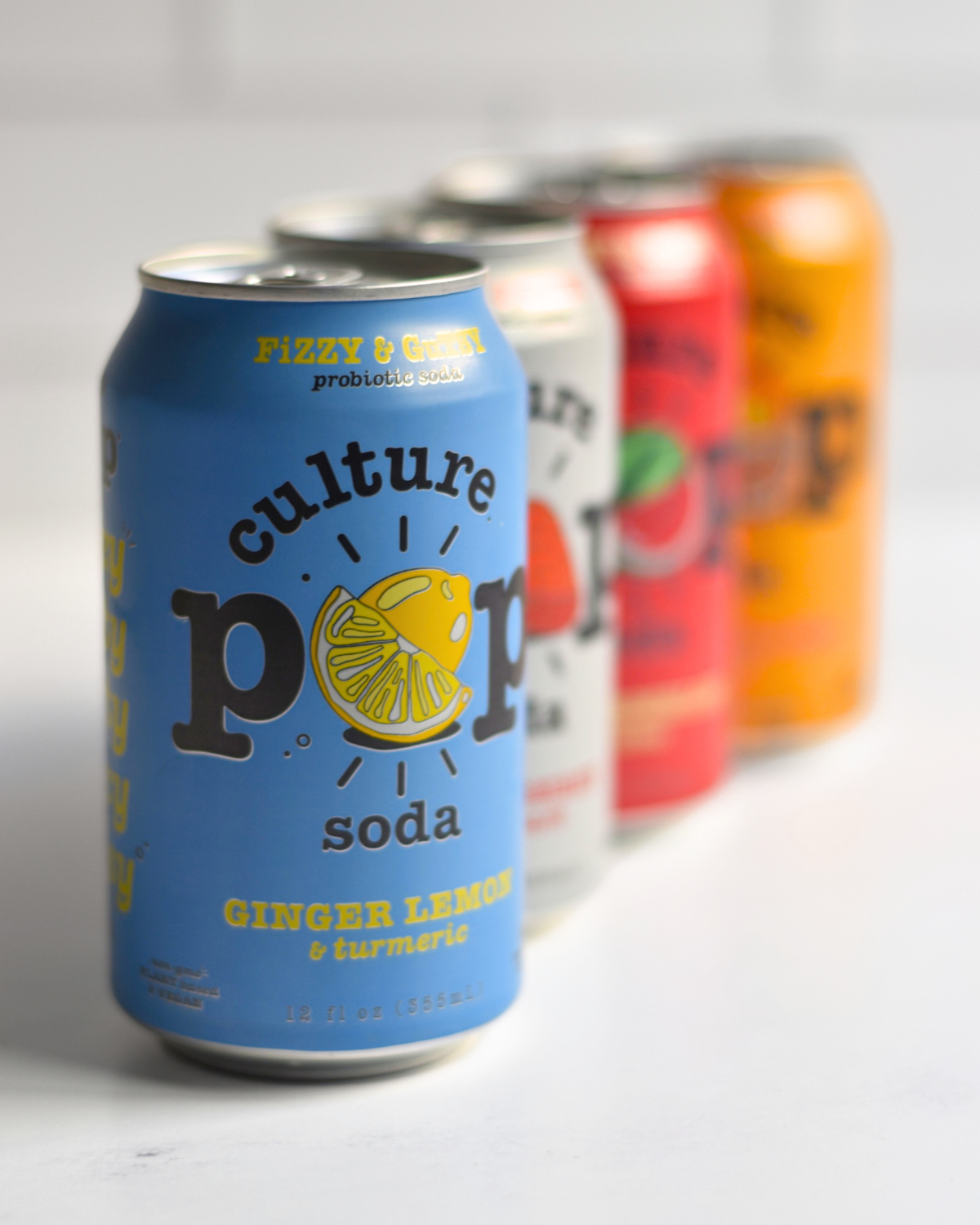
Culture Pop is a probiotic soda that puts a fresh spin on the classic fizzy drink. Instead of relying on refined sugar or artificial sweeteners, it gets its sweetness from fruit juice and combines it with herbs, spices, and live probiotics for a healthier take on soda.
Each 12-ounce can contains about 45-50 calories and billions of live probiotic cultures at the time of canning. Culture Pop also skips stevia and other high-intensity sweeteners, which can be a major selling point if you’re looking for a soda alternative but don’t love that lingering sweetener taste.
The flavors are where things get especially fun. The brand offers a variety of fruit-forward flavors, such as:
- Raspberry Lemonade
- Orange Mango & Lime
- Grape
- Strawberry & Rhubarb
- Watermelon & Lime
- Wild Berries & Lime
- Lemon Lime
- Ginger Lemon & Turmeric
- Pink Grapefruit & Ginger
Culture Pop also offers a variety of limited edition seasonal flavors, such as Sparkling Apple and Black Cherry.
Culture Pop nutrition facts
So what are you actually getting in a can of Culture Pop? The nutrition facts vary a bit based on the flavor, but most 12-ounce cans contain 45-50 calories and around 10-12 grams of sugar, with no added sugar.
Here’s what you can typically expect to find in a 12-ounce can:
- Calories: 45-50
- Total carbohydrates: 11-13 grams
- Total sugars: 10-12 grams
- Added sugars: 0 grams
- Protein: 0 grams
- Fat: 0 grams
The first thing that stands out is the sugar. Culture Pop gets its sweetness from fruit juice rather than added cane sugar or high-intensity sweeteners, so the sugar on the nutrition label is all naturally occurring. However, keep in mind that it doesn’t contain the fiber you’d get from eating whole fruit.
The calorie count is also a lot lower than most regular sodas, but it still gives you those same sweet, bubbly vibes.
On the flip side, Culture Pop isn’t claiming to be a nutritional powerhouse. You won’t find much protein, fiber, vitamins, or minerals in a can, so I’d think of it as a fun beverage rather than a meaningful source of nutrients.
Culture Pop ingredients
One of the things I really like about Culture Pop is that the ingredient list is pretty short and recognizable. The exact ingredients vary by flavor, but Culture Pop generally combines fruit juice, herbs or spices, vinegar, and live probiotic cultures to create its signature sweet-tart taste.
Here’s a closer look at some of the key ingredients you’ll find in Culture Pop:
- Fruit juice: This is where much of the sweetness comes from, along with the fruity flavor. Depending on the variety, Culture Pop uses juices such as apple, lemon, lime, orange, mango, strawberry, or rhubarb.
- Apple cider vinegar: A small amount of vinegar adds acidity and helps give the soda its slightly tangy taste.
- Herbs and spices: Ingredients like ginger, turmeric, cardamom, and cayenne help give the different flavors their distinctive taste, without relying on artificial flavors or sweeteners.
- Probiotic cultures: Culture Pop adds live probiotic cultures to its sodas, which is one of the biggest differences that sets it apart from regular soda. The company says its drinks contain billions of live cultures at the time of canning, including Bacillus subtilis, one of the most well-studied probiotic species.
- Carbonated water: This is what gives Culture Pop its familiar bubbly, soda-like quality.
Another thing worth noting: Culture Pop contains no refined sugar, stevia, or artificial or high-intensity sweeteners. Instead, the sweetness comes primarily from fruit juice.
Overall, the ingredient list is refreshingly straightforward. That doesn’t automatically make a food or beverage healthy, but I do appreciate that Culture Pop doesn’t use a long list of additives or unnecessary ingredients.
Is Culture Pop healthy?
So, is Culture Pop actually healthy? Ultimately, it can be a healthier alternative to soda, but I wouldn’t put it in the same category as a nutrient-rich beverage or health food.
For starters, Culture Pop is relatively low in calories and contains no added sugar, which can make it a nice alternative to other sugary drinks. It also provides live probiotics, giving it a potential perk for gut health that you won’t get from a typical can of cola.
I also like that it skips stevia and other high-intensity sweeteners, especially for people who don’t enjoy their taste.
There are a few things to keep in mind, though. Culture Pop is still a sweetened beverage, and most of its carbohydrates come from fruit juice. It also doesn’t provide much in the way of protein or fiber, so it won’t be nearly as filling as eating fresh fruit or having a snack with protein and fiber.
The probiotics are a nice bonus, but I wouldn’t buy Culture Pop solely for gut health. The potential perks of probiotics really depend on the specific strains and amounts consumed, so having probiotics in a beverage doesn’t necessarily mean you’ll notice a digestive benefit.
Ultimately, I think Culture Pop can definitely fit a balanced diet, especially if you’re looking for a flavorful alternative to traditional soda. However, I’d think of it as a better-for-you soda rather than a health drink.
Cost
Culture Pop is definitely pricier than your average can of soda, so the cost is worth considering if you’re thinking about making it a regular purchase.
Prices vary depending on where you buy it and whether you’re purchasing individual cans or a multipack, but you can generally expect to pay around $2-$3 per 12-ounce can.
That’s not exactly a budget-friendly beverage, especially if you’re drinking one every day. However, the higher price might make sense if you really like the flavor or want the added perk of probiotics.
Where to buy it
Ready to give Culture Pop a try? Luckily, you don’t have to go on a soda scavenger hunt to find it. Culture Pop is sold at a variety of grocery stores and retailers across the United States, and you can even order it online.
You can find Culture Pop at retailers like Sprouts, Whole Foods, Target, and Walmart, although the exact flavors and availability can vary by store.
You can also buy it directly from the Culture Pop website if you already know which flavors you want to try.
If you’re buying it in person, I’d recommend checking the store locator before heading out, especially if you have your heart set on a specific flavor. There’s nothing worse than showing up for your probiotic soda only to find an empty shelf!
Who should try Culture Pop?
Culture Pop is a fun option for anyone who enjoys soda but wants something a little different. With less sugar than regular soda and live probiotics, it can be an easy swap when you’re craving something sweet and bubbly without reaching for a sugary soft drink.
Culture Pop may be a good fit if you:
- want a lower-sugar soda option
- don’t like stevia or artificial sweeteners and prefer sweetness from fruit juice
- enjoy fruity, refreshing drinks with carbonation
- want to add more probiotic foods and drinks to your routine
- are looking for a fun afternoon pick-me-up
- like trying new “better-for-you” beverages and want to see what the probiotic soda trend is all about
That said, Culture Pop isn’t for everyone. If you’re looking for a zero-calorie soda or a beverage that’s going to keep you full, there are other options that may make more sense. And while the probiotics are a fun perk, I wouldn’t choose Culture Pop solely for gut health.
If you already enjoy it, though, there’s no reason to overthink it. It’s a tasty beverage that can fit into an overall balanced diet.
Stay in the loop!
Healthy eating tips & recipes delivered directly to your inbox
My honest review
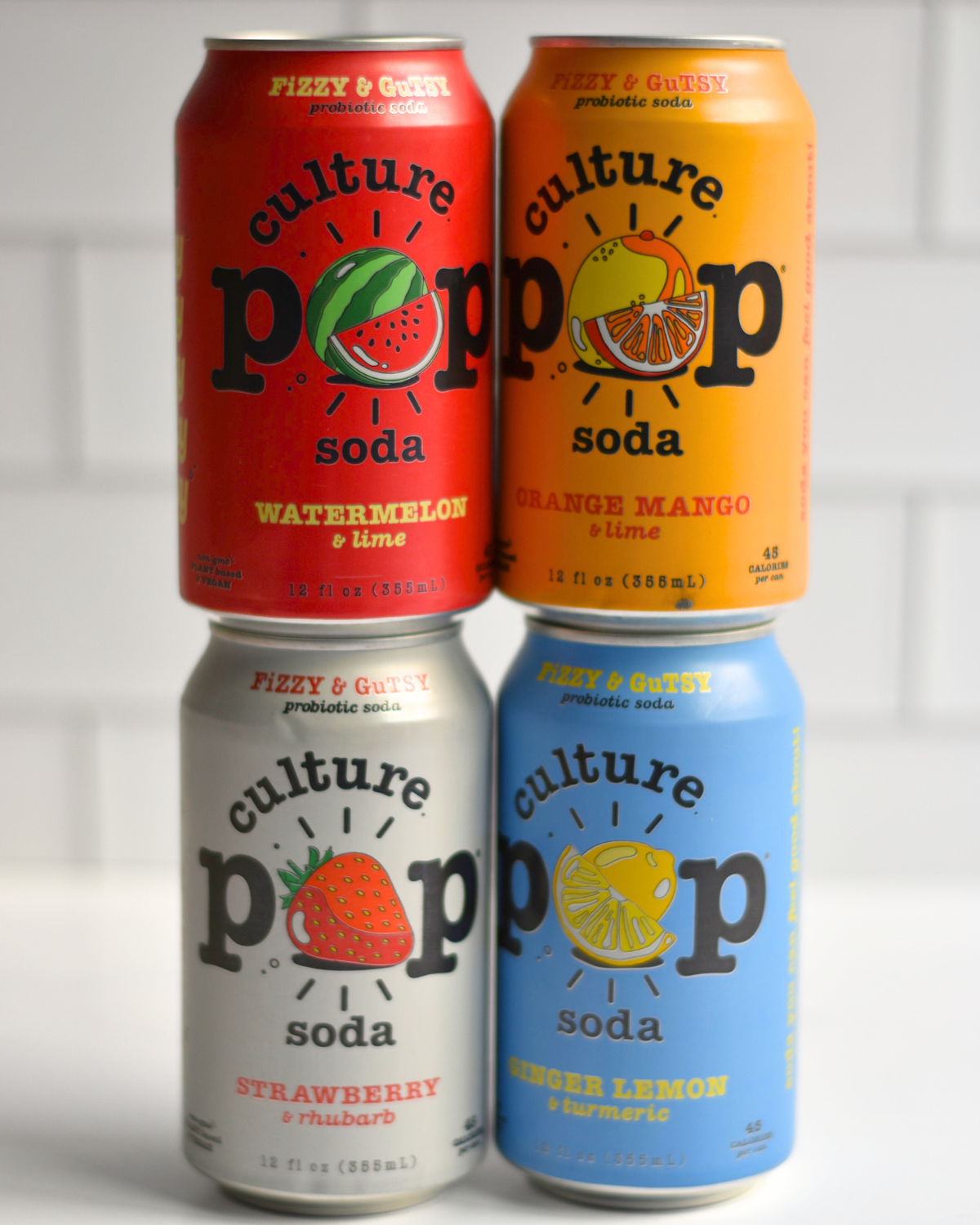
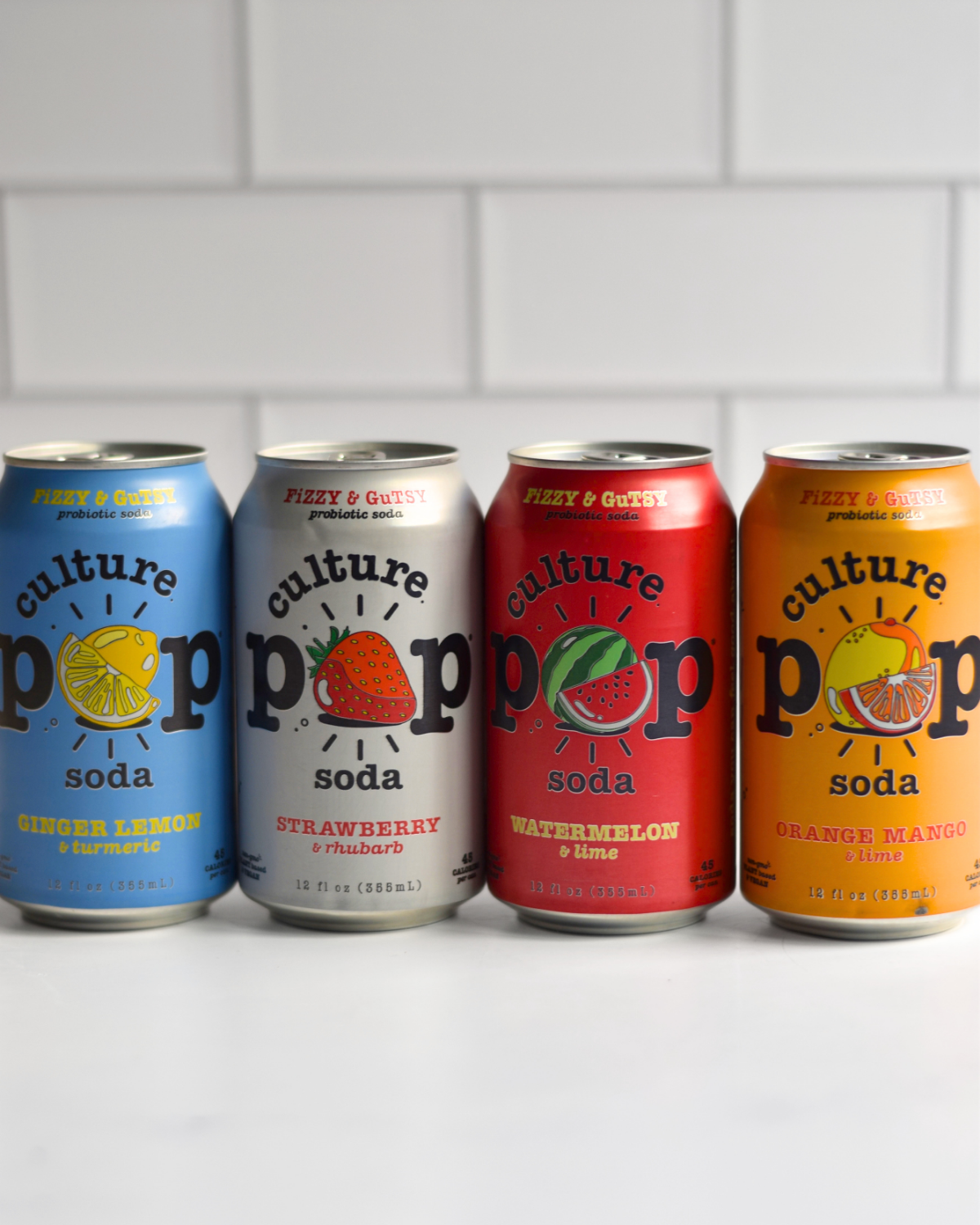
I was curious about Culture Pop after seeing it at the store so many times, so I finally decided to give it a try for myself. I settled on four flavors, including:
- Ginger Lime & Turmeric
- Orange Mango & Lime
- Strawberry & Rhubarb
- Watermelon & Lime
Since I was approaching it both as a dietitian and as someone who genuinely enjoys trying new fizzy drinks, I was especially interested in whether the flavors would live up to the health-focused marketing.
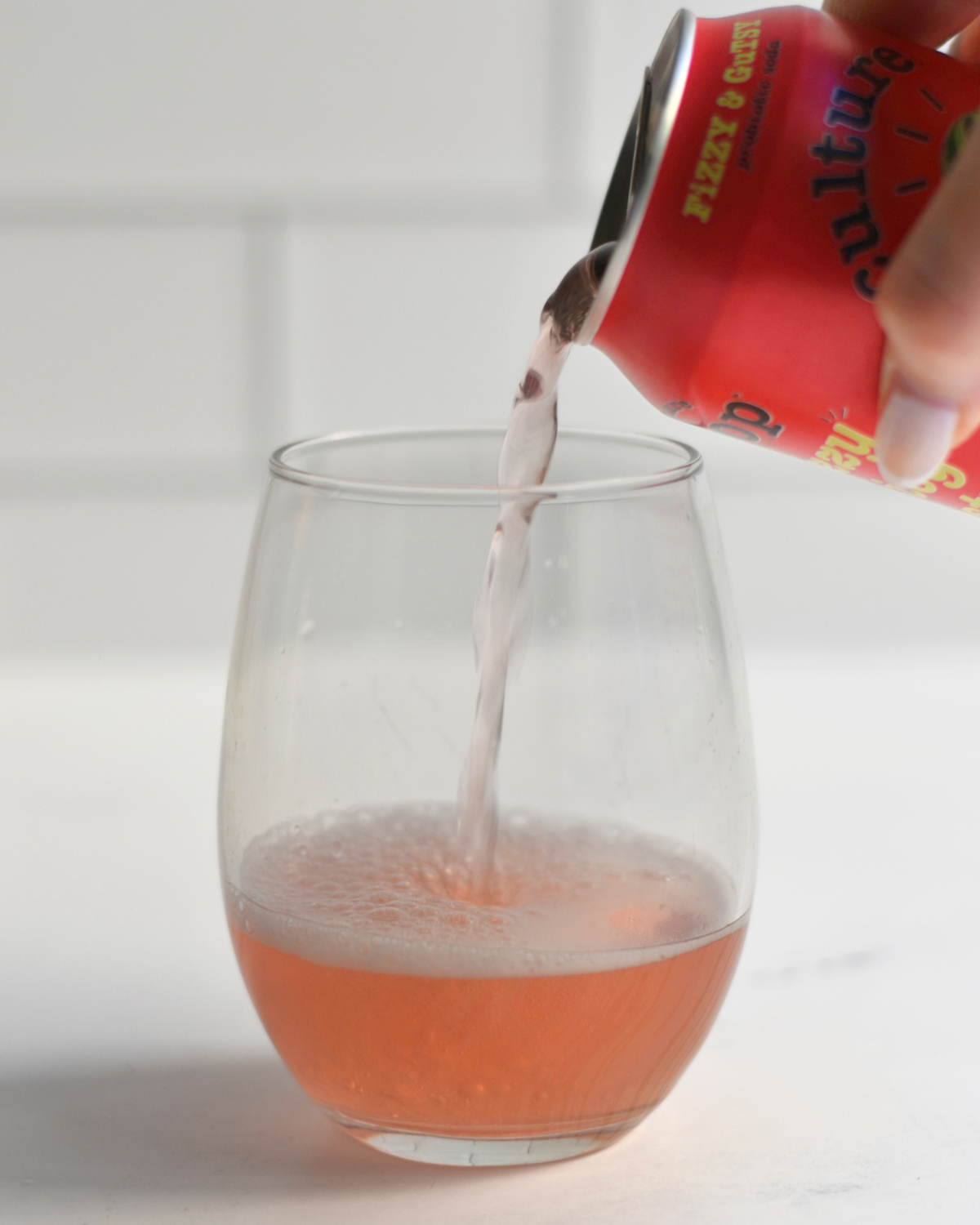
My first impression? Culture Pop is a lot lighter than I expected. I was anticipating something fairly sweet and bold, but the flavors are actually quite subtle. All four were pleasantly fizzy and refreshing without being overly sweet, and I didn’t notice any unpleasant aftertaste.
They have enough flavor to make them interesting, but they’re definitely not the type of soda that hits you with a huge burst of sweetness when you take a sip.
The Ginger Lime & Turmeric was easily the most distinctive of the four. The ginger flavor is pretty strong, with a noticeable spicy kick that comes through more than the other flavors. Personally, I liked it, especially because it kept the drink from tasting too sweet, but I’d probably skip this one if you’re not a fan of ginger.
Orange Mango & Lime was fruity and refreshing, with a nice citrusy element from the lime. It was still pretty subtle, though, so don’t expect a super-sweet tropical soda. Watermelon & Lime was similarly light and refreshing, and the lime really helped balance out the watermelon flavor.
My favorite, though, was definitely Strawberry & Rhubarb. It had the fruity flavor I was looking for while still having that slightly tart quality from the rhubarb, and I thought the two flavors worked really well together. Of the four I tried, this was the one I could most easily see myself reaching for again.
Overall, I enjoyed trying Culture Pop. The biggest thing to know is that the flavors are subtle and they don’t contain any sweeteners, so if you prefer super-sweet, intensely flavored sodas, you may find them a little underwhelming.
However, if you like a lighter, refreshing, fizzy drink that isn’t overly sweet and doesn’t leave behind a weird aftertaste, Culture Pop might be worth a try.
Would I buy it again?
After giving Culture Pop a try, I could see myself picking up a few cans as a fun way to mix things up, especially when I’m in the mood for something fizzy and refreshing.
I personally prefer other probiotic drinks like kombucha, but I liked that Culture Pop wasn’t overly sweet and didn’t have an unpleasant aftertaste. The flavors are also subtle enough that I could see it being an easy drink to sip with lunch or as an afternoon pick-me-up without feeling like I’m drinking a super-sweet soda.
Will it become a regular staple in my fridge? Probably not. But I think it’s a fun option to keep around every once in a while, especially if you enjoy trying functional beverages!
Culture Pop vs. regular soda
Wondering how Culture Pop stacks up against regular soda? The biggest difference is the amount and type of sugar. Here’s how a 12-ounce serving of Culture Pop and soda compare.
| Culture Pop | Soda | |
|---|---|---|
| Calories | 45 | 155 |
| Total carbohydrate | 10 g | 38.5 g |
| Total sugar | 8 g | 37 g |
| Added sugar | 0 g | 37 g |
| Protein | 0 g | 0 g |
| Fat | 0 g | 1 g |
| Fiber | 0 g | 0 g |
Culture Pop has about 70% fewer calories and over 75% less total sugar than regular soda. Culture Pop also gets its sweetness from organic fruit juice rather than refined sugar and contains live probiotics, which gives it a few features you won’t find in soda.
Of course, that doesn’t mean Culture Pop suddenly becomes a super nutritious drink. It still provides very little beyond its calories, carbohydrates, and probiotics, and it doesn’t contain fiber despite being sweetened with fruit juice.
Still, if you’re choosing between a traditional full-sugar soda and Culture Pop, Culture Pop is a lower-sugar, lower-calorie option.
Culture Pop vs. competitors
The functional soda aisle has gotten seriously crowded, but these drinks aren’t all doing the same thing. Culture Pop is a probiotic soda, while Poppi, OLIPOP, and Simply Pop are built around prebiotic fiber. That distinction is worth paying attention to, especially if you’re choosing one based on its gut health claims.
Here’s a quick look at how they compare.
| Culture Pop | Poppi | OLIPOP | Simply Pop | |
|---|---|---|---|---|
| Type | probiotic soda | prebiotic soda | prebiotic soda | prebiotic soda |
| Calories | 45-50 | ~30-50 | 35-50 | 50-60 |
| Sugar | 8-10 g | varies by flavor | 2-5 g | 9-10 g |
| Added sugar | 0 g | varies by flavor | 1-3 g | 0 g |
| Fiber | 0 g | 3 g | 6-9 g | 6 g |
| Probiotics | yes | no | no | no |
| Prebiotic fiber | no | yes | yes | yes |
| Stevia | no | yes | yes | no |
| Fruit juice | yes | varies | varies | yes |
Pros and cons
Still on the fence about Culture Pop? Here’s where the brand shines and where it falls a little short.
Pros:
- Lower in sugar than traditional soda: With around 8-10 grams of sugar per can, Culture Pop is considerably lower in sugar than a typical soda.
- No added sugar: The sweetness in Culture Pop comes from fruit juice rather than added sugar.
- Contains live probiotics: Each can provides billions of live probiotic cultures, which is a nice bonus for a soda.
- No stevia: If you’re not a fan of the aftertaste of stevia, Culture Pop is worth a try.
- Short ingredient list: The ingredients are relatively simple and include recognizable fruit, herbs, and spices.
- Fun flavors: The fruity and botanical combinations make it feel a little more exciting than your standard soda.
Cons:
- Still contains sugar: While it’s lower in sugar than regular soda, Culture Pop isn’t sugar-free.
- No fiber: Unlike some of its prebiotic soda competitors, Culture Pop doesn’t provide a meaningful amount of fiber.
- Not a significant source of nutrients: Culture Pop provides little in the way of protein, fiber, vitamins, or minerals.
- Probiotics aren’t a magic bullet: The presence of probiotics doesn’t guarantee a noticeable benefit for gut health, and probiotic effects can vary depending on the specific strain, dose, and person.
- More expensive than traditional soda: You’re likely to pay a premium for the probiotic soda experience.
FAQ
More product reviews
LMNT Electrolytes Review: Is It Worth It? A Dietitian Weighs In
MISFITS Protein Bars Review: A Dietitian’s Honest Take
DAVID Protein Bars Review: A Dietitian’s Honest Take
Protein Pop Review: A Dietitian’s Take on Ingredients, Nutrition, and Taste
Magic Spoon Cereal Review: Is It Actually Worth the Price?
Conclusion
Overall, Culture Pop is a fun option if you want the fizzy, flavorful experience of soda with less sugar, plus the bonus of live probiotics.
It’s not a replacement for whole fruit or a high-fiber food, but as an occasional beverage or swap for regular soda, I think it can absolutely fit into a well-rounded diet.
And with flavors that are a little more exciting than your standard cola, it’s one I’d happily crack open when I’m in the mood for something bubbly.