What Does a Balanced Meal Look Like? Simple Guide + Meal Ideas
Quick summary
Eating well can feel overwhelming with all the different nutrition advice out there, but it doesn’t have to be complicated. Understanding what a balanced meal looks like is the first step to creating plates that keep you full and feeling your best. A balanced meal combines protein, complex carbohydrates, fiber-rich vegetables or fruit, and healthy fats to support your body’s needs.
In this guide, we answer the question, “what does a balanced meal look like?” We’ll also cover practical examples, step-by-step tips, and simple meal ideas. Whether you’re cooking at home, grabbing a quick lunch, or planning for a busy week ahead, these strategies make it easy to eat more balanced meals every day.
What is a balanced meal?
A balanced meal should include a mix of protein, carbohydrates, and healthy fats, along with fiber-rich foods like fruits or vegetables.
Each of these nutrients plays a different role in the body:
- protein promotes muscle growth and satiety
- carbohydrates provide energy
- fats help with hormone production
- fiber keeps your digestive tract running smoothly
When combined, these nutrients work together to keep you full and energized after eating.
Rather than focusing on strict rules or perfect portions, balanced eating is all about creating diverse and delicious meals that include a variety of nutrients to support overall health.
Key components of a balanced meal
A balanced meal includes a mix of nutrients that work together to keep you and nourished. Here are the core components to include on every plate.
Protein
Protein is an essential part of a balanced meal because it supports satiety, builds and maintains muscle, and plays a role in stabilizing blood sugar levels.
Including a good source of protein at each meal can make your meals more satisfying and help prevent energy crashes later on.
Examples of protein-rich foods include:
- eggs
- yogurt
- beans
- lentils
- tofu
- tempeh
- chicken
- fish
- nuts
- seeds
Complex carbs
Complex carbohydrates are a key component of a balanced meal because they provide steady, long-lasting energy and contain important nutrients like fiber, vitamins, and minerals.
Unlike refined carbs, complex carbs are digested more slowly, which helps balance blood sugar and supports better energy throughout the day.
Good sources include:
- whole grains (oats, brown rice, and quinoa)
- beans
- lentils
- fruits
- starchy vegetables (potatoes, corn, peas, sweet potatoes)
Healthy fats
Healthy fats often get a bad rap, but they’re essential for a balanced, nourishing meal.
They support hormone function, brain health, and the absorption of fat-soluble vitamins, while also adding flavor and helping you stay satisfied.
A few sources of healthy fats include:
- avocados
- olive oil
- nuts
- seeds
- fatty fish (salmon, tuna, sardines)
Fiber-rich foods
High-fiber foods are often the missing piece of a balanced meal, but they play a key role in digestion, fullness, and overall health.
Fiber helps support gut health, keeps things moving smoothly, and can even help stabilize blood sugar levels.
Some of the best sources of fiber include:
- fruits
- vegetables
- whole grains
- beans
- lentils
- nuts
- seeds
Stay in the loop!
HEALTHY EATING TIPS & RECIPES delivered directly TO YOUR INBOX
What does a balanced plate look like?
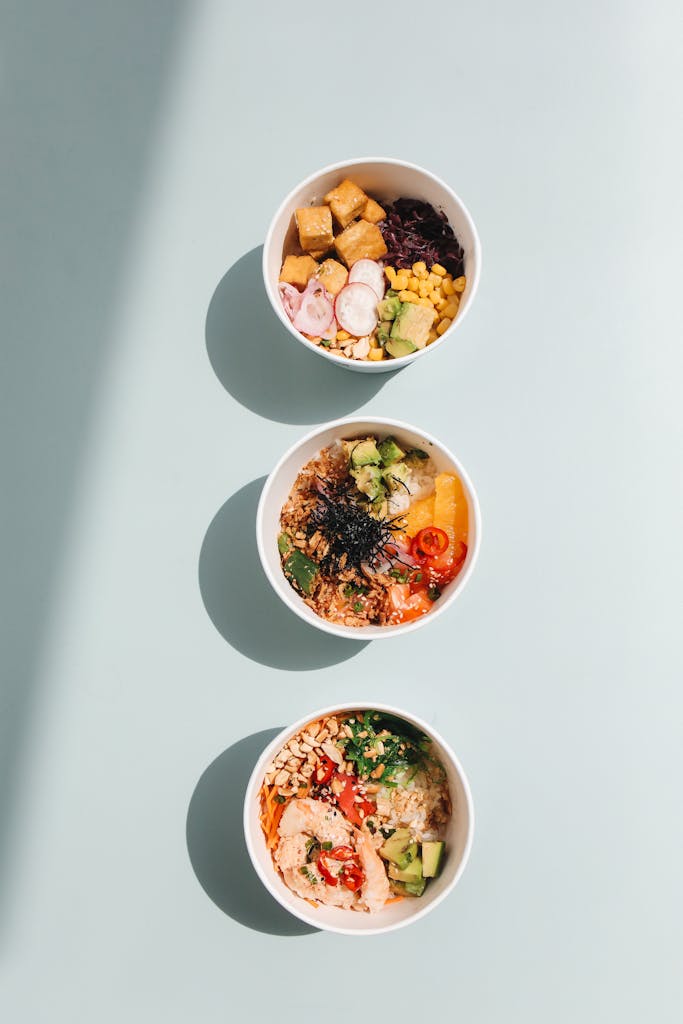
So what does a balanced plate look like in real life? The simplest way to build a balanced meal is to use the plate method.
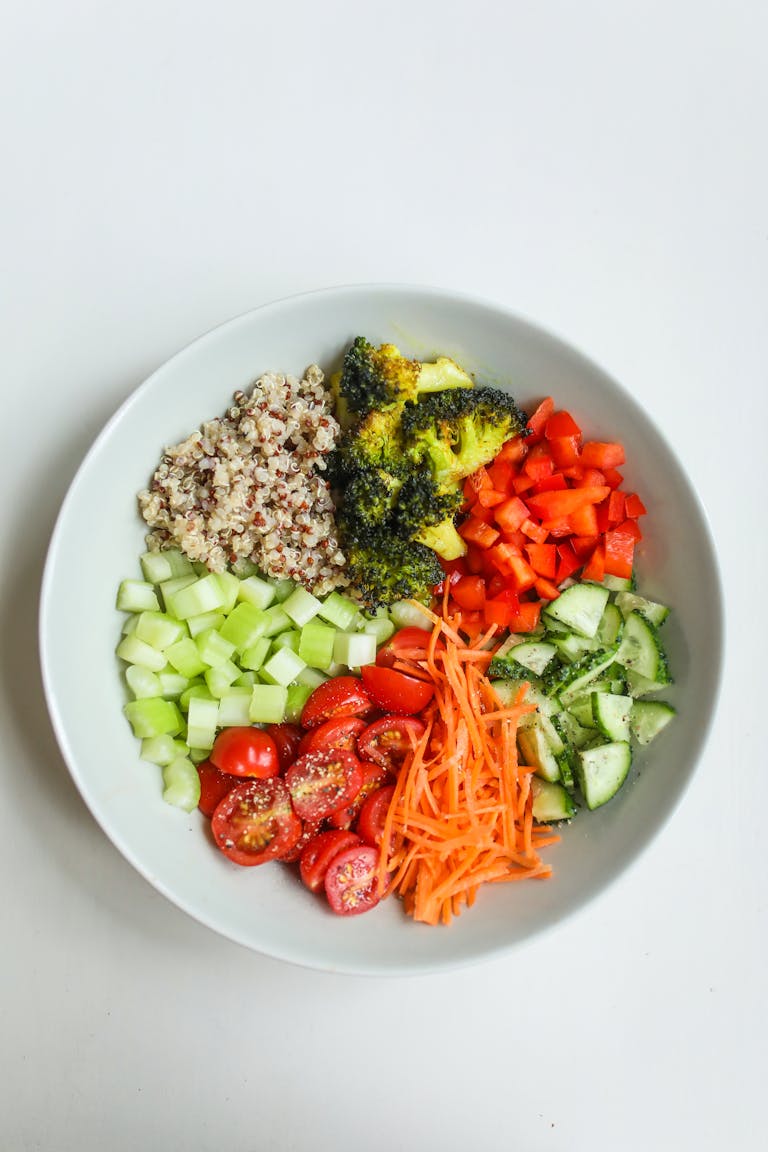
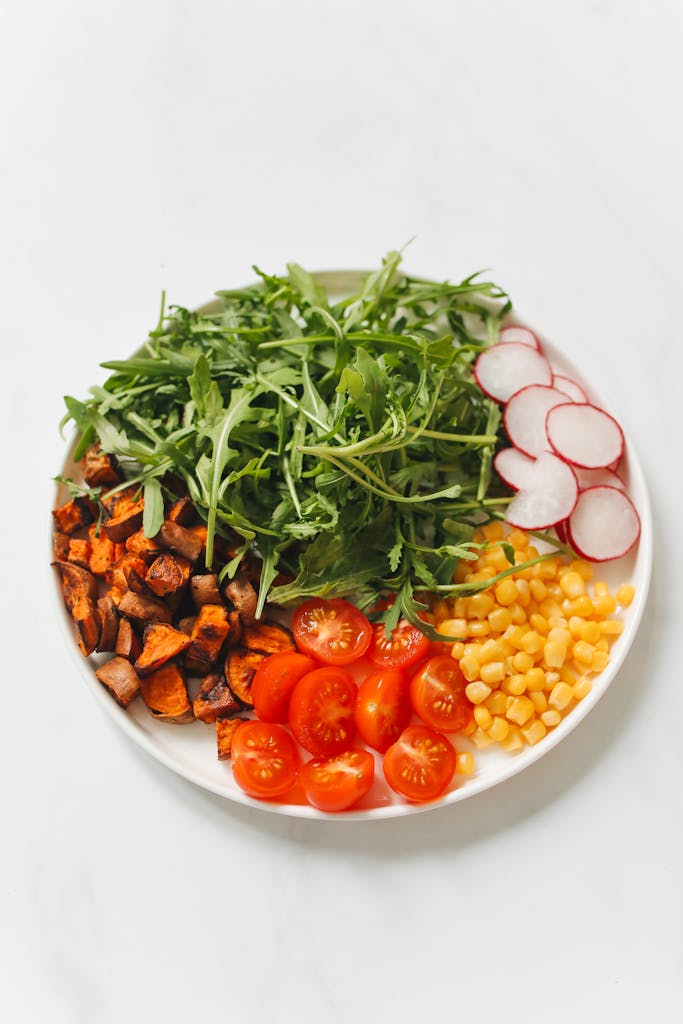
Start by filling about half your plate with vegetables or fruit, one-quarter with a source of protein, and one-quarter with a quality carbohydrate like whole grains or starchy vegetables. Then, add a small amount of healthy fats, such as olive oil, nuts, seeds, or avocado.
This approach makes it easy to create meals that include a variety of nutrients without needing to measure out meals or log every bite.
Balanced meal examples
Creating balanced meals doesn’t have to be tricky or time-consuming. Here are a few easy examples you can try.
Breakfast
- Greek yogurt with berries, a sprinkle of chia seeds, and a small handful of almonds
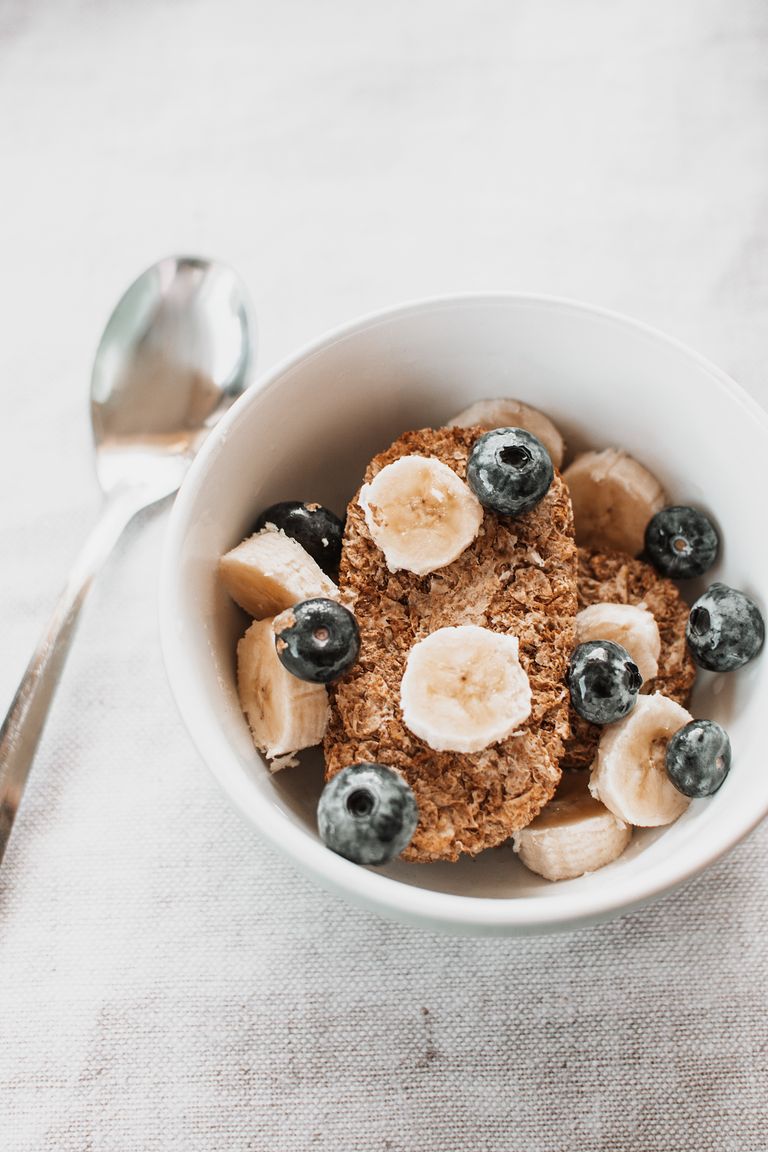
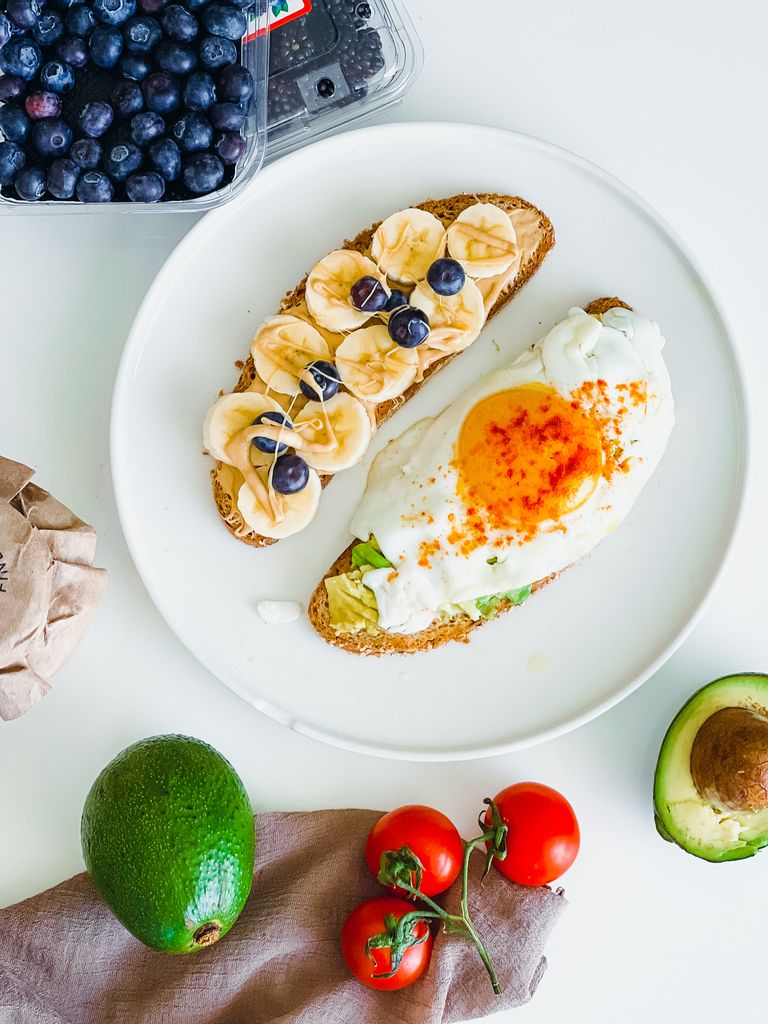
- oatmeal topped with sliced banana and nut butter
- whole-grain avocado toast with scrambled eggs
- veggie omelet with shredded cheese and fruit salad
Lunch
- grilled chicken with quinoa, roasted vegetables, and a drizzle of olive oil
- chickpea salad with mixed greens, cherry tomatoes, avocado, and a whole-grain roll
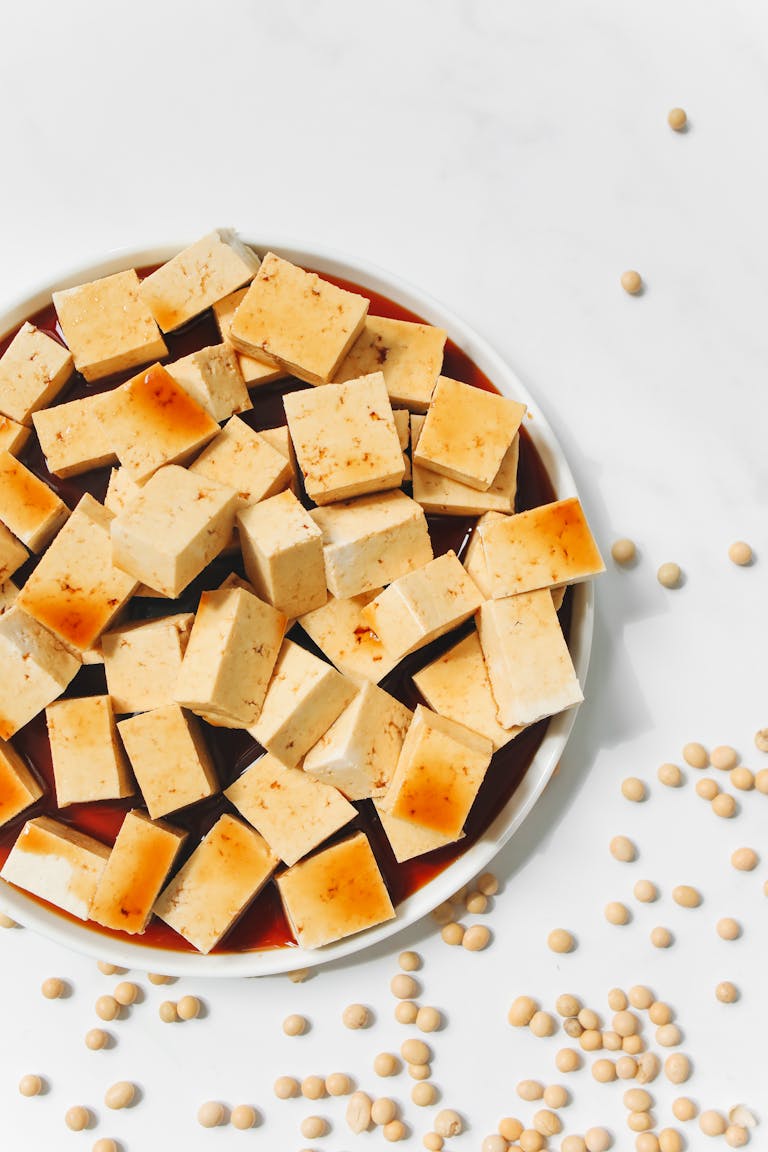
- baked tofu with herby whole-wheat couscous and sautéed Brussels sprouts
- brown rice bowl with black beans, roasted sweet potato, sautéed kale, and tahini drizzle
Dinner
- baked salmon with barley, steamed broccoli, and roasted sweet potatoes
- veggie stir-fry with tempeh, mixed vegetables, and soba noodles cooked in sesame oil
- turkey chili topped with avocado slices and a side of cornbread
- lentil soup with whole-grain bread and a small green salad with olive oil
Snacks
- apple slices with peanut butter
- carrot and cucumber sticks with hummus and sunflower seeds
- protein smoothie with spinach, frozen berries, and almond butter
- handful of mixed nuts with fresh fruit
How to build a balanced meal
Creating a balanced meal is actually easier than it sounds. Follow these simple steps to make sure every plate includes the nutrients your body needs.
Step 1: Choose your protein
Start with a protein source to help keep you full and support muscle maintenance. Options include eggs, chicken, fish, tofu, tempeh, legumes, or Greek yogurt.
Step 2: Add a quality carb
Include a source of complex carbs for energy. Think whole grains like brown rice, quinoa, oats, or starchy veggies, such as sweet potatoes.
Step 3: Fill up on fiber
Fill at least half your plate with fruits and veggies. Fiber supports digestion, stabilizes blood sugar, and keeps meals satisfying.
Step 4: Include healthy fats
Add a small portion of healthy fats to round out your meal. Avocados, olive oil, nuts, seeds, or fatty fish not only add flavor but also help your body absorb nutrients.
Step 5: Mix and match for variety
Rotate different proteins, carbs, and veggies to keep meals interesting. This also helps ensure you’re getting a wide range of vitamins and minerals in your overall diet.
Simple tips for eating more balanced meals
Try these simple tips to build more balanced meals and fuel your body with the nutrients it needs:
- Plan ahead: Prep ingredients or meals in advance to make balanced eating easier.
- Use the plate method: Fill half your plate with veggies and fruits, a quarter with protein, and a quarter with carbs.
- Include protein at every meal: This helps keep you full and supports muscle and energy.
- Prioritize minimally processed foods: Focus on whole grains, fresh produce, and nutrient-dense proteins.
- Add healthy fats: A small portion of nuts, seeds, avocado, or olive oil boosts flavor and satiety.
- Mix it up: Rotate proteins, veggies, and grains to get a variety of nutrients.
- Keep snacks balanced: Pair fruit with protein or veggies with healthy fats to avoid energy crashes.
- Start small: Even one balanced meal a day can make a big difference over time.
FAQ
More tips for balanced eating
How to Eat More Whole Foods: Tips, Meal Ideas, and More
How to Read Nutrition Labels Like a Dietitian
What is Mindful Eating? Tips, Tricks, and How to Get Started
10 Best Breakfasts for Blood Sugar Control to Start Your Day Right
15 Healthy Breakfast Ideas for Busy Mornings
Conclusion
What does a balanced meal look like? By including a mix of protein, complex carbohydrates, fiber-rich vegetables or fruit, and healthy fats, you can fuel your body, stay satisfied, and promote overall health.
Using simple strategies like the plate method, meal prep, and easy ingredient swaps makes it simple to enjoy balanced meals every day, without any stress or guesswork.