How to Read Nutrition Labels Like a Dietitian
Quick summary
Have you ever picked up a snack that looked healthy, only to realize it was packed with added sugar, sodium, or ultra-processed ingredients? Bright packaging and bold buzzwords may grab your attention, but the nutrition label tells the real story.
Learning how to read nutrition labels can help you cut through misleading health claims to make more informed choices about what you’re actually putting on your plate.
In this article, we’ll break down exactly how to read nutrition labels like a dietitian so you can confidently understand serving sizes, calories, fiber, added sugar, and ingredients at a glance.
Why nutrition labels matter
Nutrition labels are one of the easiest tools for understanding what’s in your food, without needing a full-blown degree in nutrition.
They can make grocery shopping a breeze by helping you quickly compare products side by side and look past whatever trendy buzzwords or overhyped health promises are found on the front of the package.
Nutrition labels can also help you compare products, identify hidden ingredients, and keep an eye on the nutrients that matter most, like fiber, protein, added sugar, sodium, and saturated fat.
Whether your goal is to enhance heart health, boost energy levels, manage your weight, or simply eat more balanced meals, knowing how to read nutrition labels gives you greater control of your diet.
Stay in the loop!
HEALTHY EATING TIPS & RECIPES delivered directly TO YOUR INBOX
What to look for on the label
At first glance, nutrition labels can be a little overwhelming, with all the tiny numbers, percentages, and ingredient lists crammed onto the side of the box.
However, once you know which sections actually matter, reading a nutrition label becomes a quick and practical way to make smarter food choices while shopping.
Below are the most important things to check on a nutrition label.
Serving size
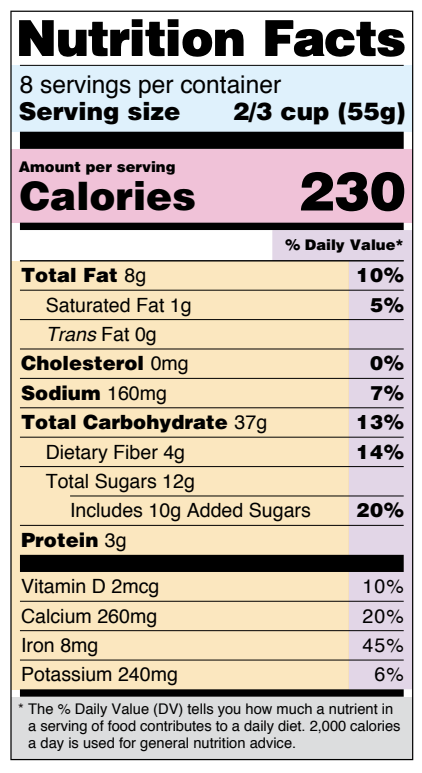
The serving size is one of the most important (and most overlooked) parts of the nutrition label. Every single number listed on the label is based on the specific serving size listed at the top.
This is where nutrition labels can sometimes be a bit misleading at first glance. For example, a small bag of chips may look like it contains only 150 calories, but if the package includes two servings and you eat the whole bag, you’re actually getting double the calories, sodium, and fat.
Pay attention to both the serving size and the number of servings per container. This can help you better understand how much you’re really eating and avoid being misled by deceptively small portions.
Calories
Calories may tell you how much energy a food provides, but they definitely don’t tell the whole story about how “healthy” a food is.
A higher calorie food isn’t automatically bad, just like a lower calorie food isn’t automatically good. Instead, it really all comes down to the quality of the ingredients and what else is in it.
For example, 200 calories from nuts — which provide healthy fats, protein, and fiber — will impact your body differently than 200 calories from candy with added sugar and little nutritional value.
When reading a label, think of calories as a starting point. From there, look at the full nutrient breakdown to check whether a food is actually nourishing or simply energy-dense.
Protein
Protein is one of the most important nutrients to pay attention to on a nutrition label because it helps build muscle and keeps you fuller for longer. It can also help stabilize energy levels, especially when paired with fiber and heart-healthy fats.
More protein isn’t always better, but checking the amount per serving can help you choose foods that align with your health goals, whether that’s staying full between meals, building more balanced snacks, or supporting an active lifestyle.
Fiber
Fiber is one of the most underrated nutrients on a nutrition label, but it plays a big role in overall health. It boosts gut health, promotes regularity, keeps you feeling fuller for longer, and even helps balance blood sugar levels after meals.
When comparing products, fiber is a quick way to spot more nutrient-dense choices, especially for foods like bread, cereal, granola bars, and snacks. Foods higher in fiber are often less processed and tend to provide more lasting energy.
Added sugar
Unlike natural sugars found in fruit or dairy, added sugar is included during processing to enhance flavor, and they can show up in everything from yogurt and granola bars to sauces and drinks.
Keeping an eye on added sugar can help you pick products that are more balanced and less processed. Even foods that seem otherwise nutritious can contain several teaspoons per serving, which adds up quickly throughout the day.
There’s no need to avoid sugar entirely, but checking the amount of added sugar in each serving helps you make more intentional choices.
Sodium
If you’re on a heart-healthy diet or hoping to manage bloating and water retention, you’ll want to keep tabs on your sodium intake.
Sodium is naturally present in some foods, but it’s also heavily used in packaged and processed foods to improve flavor and extend shelf life.
When comparing products, sodium levels can vary a lot, so it’s worth checking before you buy. Foods like soups, sauces, deli meats, and frozen meals are common sources where sodium can stack up quickly without you even realizing it.
% Daily Value
The % Daily Value (%DV) is a quick way to understand how much a nutrient in a serving of food contributes to your daily needs.
It’s based on a standard 2,000-calorie diet, so it gives you a general reference point, but it’s not a personalized recommendation.
As a rule of thumb, 5% DV or less is considered low, while 20% DV or more is considered high.
This makes it especially helpful for quickly identifying nutrients you may want more of (like fiber, vitamin D, or calcium) or nutrients you may want to limit (like saturated fat, sodium, or added sugar).
Ingredients list
The nutrition facts panel tells you how much of each nutrient is present, but the ingredients list tells you what’s actually in the product.
When you’re checking the ingredients list, remember that ingredients are listed in order of quantity, from most to least. That means the first few ingredients make up the bulk of what you’re eating.
This section is also where you can spot things like added sugar, refined grains, or long lists of additives and preservatives.
In general, shorter ingredient lists with recognizable ingredients tend to be a sign of a less processed product.

Common nutrition label mistakes
Nutrition labels can be surprisingly easy to misread. One of the biggest mistakes is ignoring the serving size and assuming the entire package equals one serving. In reality, many products contain two, three, or even more servings per container, which can completely change the amount of calories, sugar, or sodium you’re actually eating.
Another common pitfall is zeroing in on just one nutrient, like calories or protein, and overlooking the bigger picture. A product might be low in calories but high in added sugar or low in fiber, which can leave you less satisfied and reaching for more food later. On the flip side, higher calorie foods can still be balanced and nutrient-dense.
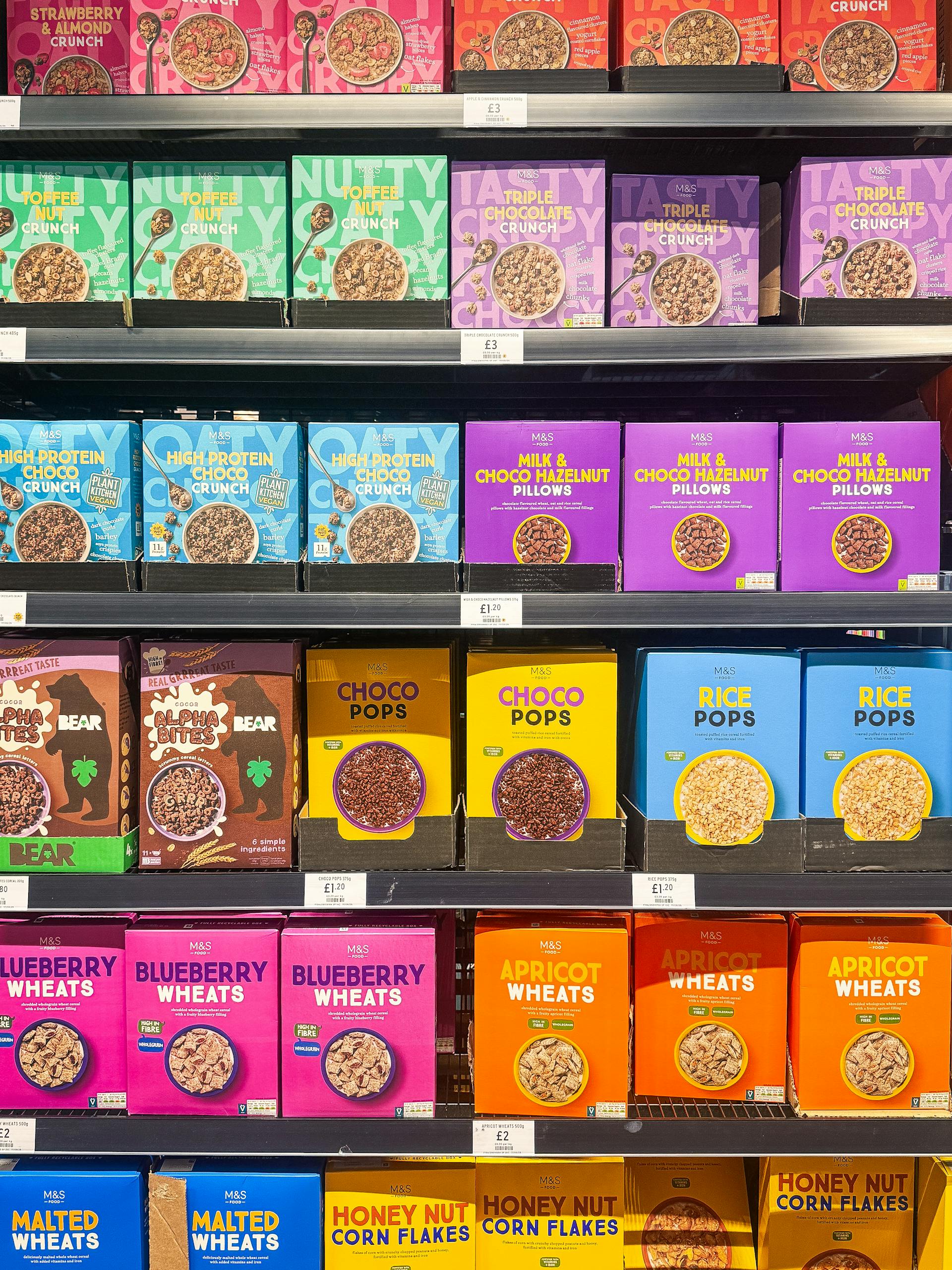
It’s also easy to get distracted by flashy claims on the front of the package (like “natural,” “low-fat,” or “made with whole grains”) without checking the nutrition facts and ingredients list. These buzzwords don’t always tell the full story, so relying on them alone can lead to less balanced choices.
Nutrition label cheat sheet
Here’s a quick list of what to look for on your next grocery run:
- Check serving size first (don’t assume the package = one serving)
- Use calories as a starting point, not the full picture
- Aim for higher fiber and protein when possible
- Keep an eye on added sugar (it adds up fast!)
- Watch sodium, especially in packaged and frozen foods
- Use %DV to quickly spot “low” (5% or less) and “high” (20% or more) nutrients
- Scan ingredients list for simplicity and recognizable foods
FAQ
More helpful articles
Conclusion
Learning how to read nutrition labels is one of the simplest ways to take control of your diet and make more informed food choices. Once you understand how to read nutrition labels, you can cut through marketing claims and focus on what really matters most for your health.