Magic Spoon Cereal Review: Is It Actually Worth the Price?
Quick summary
Cereal is pretty hard to beat when you need a quick breakfast, but most options don’t bring very much protein to the table. Magic Spoon aims to change that, with up to 14 grams of protein per serving, zero sugar, and flavors inspired by the cereals many of us grew up eating. On paper, it sounds like a pretty impressive (and delicious) upgrade.
Still, I had questions. Could a high-protein, sugar-free cereal actually taste good? Would a single bowl really keep me full until lunch? And, perhaps most importantly, could any cereal possibly be worth nearly $10 per box? I decided to try a few flavors for myself to see how they stacked up in terms of taste, texture, nutrition, and value.
In this Magic Spoon cereal review, I’ll share my honest experience, break down the ingredients and nutrition facts, and compare it with a few other popular high-protein cereals. I’ll also cover who might benefit from giving it a try and whether or not I think it deserves a regular spot in your breakfast rotation.
A quick note
I personally buy all products I review so I can give you my 100% honest, unbiased feedback. If I’m ever sent something to test from a company, I’ll always disclose it, but I’ll still give my honest thoughts regardless.
If you enjoyed this review, I’d really appreciate your support by following along on social media or signing up for my monthly email list. Thanks for being here!
What is Magic Spoon cereal?
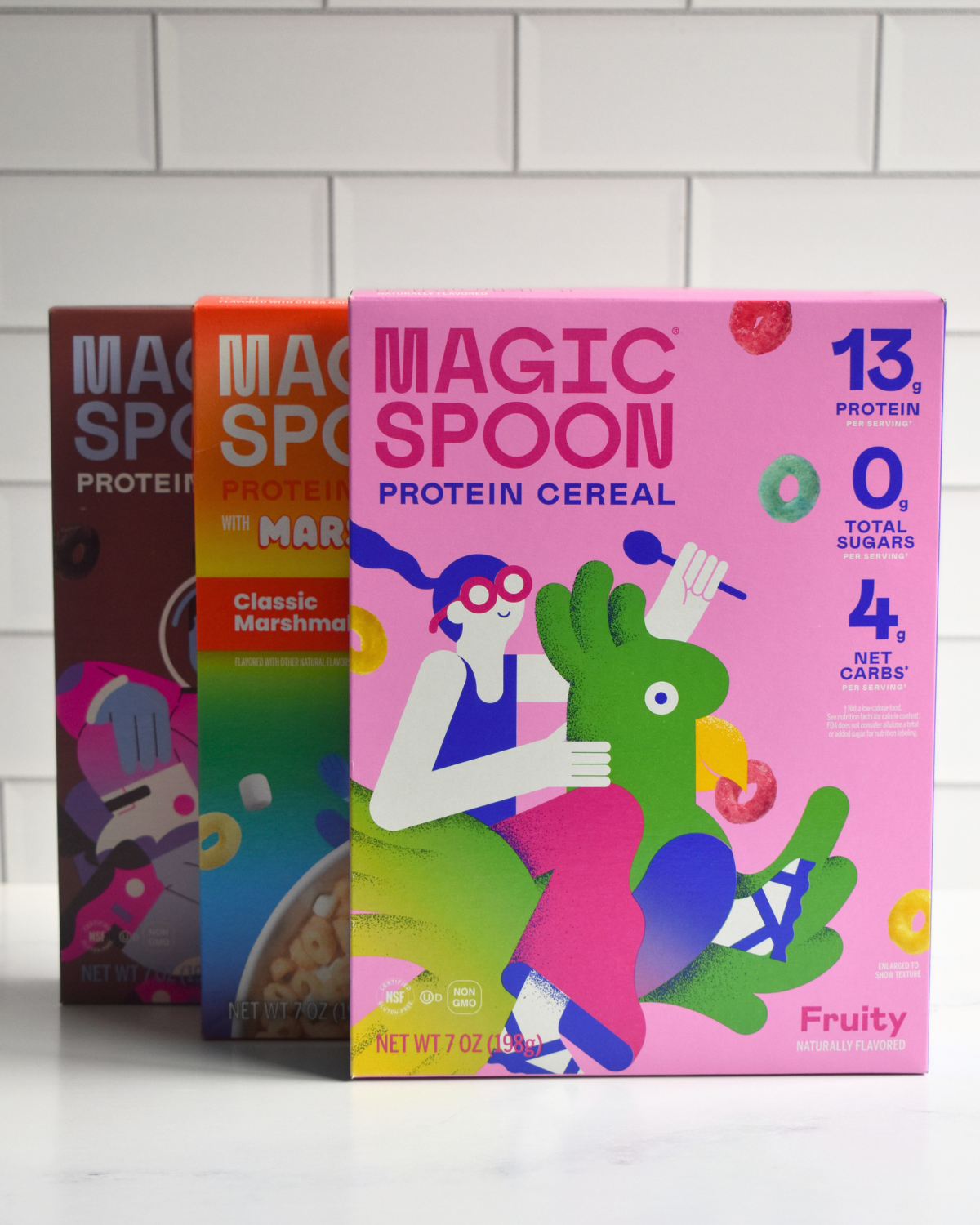
Magic Spoon is a high-protein, low-sugar cereal designed to bring a grown-up twist to the sugary cereals many of us loved as kids. The brand offers a lineup of familiar flavors like Fruity, Frosted, Cocoa, and Cinnamon Roll, but with more protein and a lot less sugar than you’d typically find hiding inside your usual colorful cereal boxes.
Instead of relying primarily on grains, Magic Spoon uses a milk protein blend to give each bowl its protein boost. The cereals are also sweetened with sugar alternatives and come in fun, dessert-inspired flavors, making them especially popular among those following low-carb diets or simply looking for a more filling breakfast cereal.
The flavors they currently offer include:
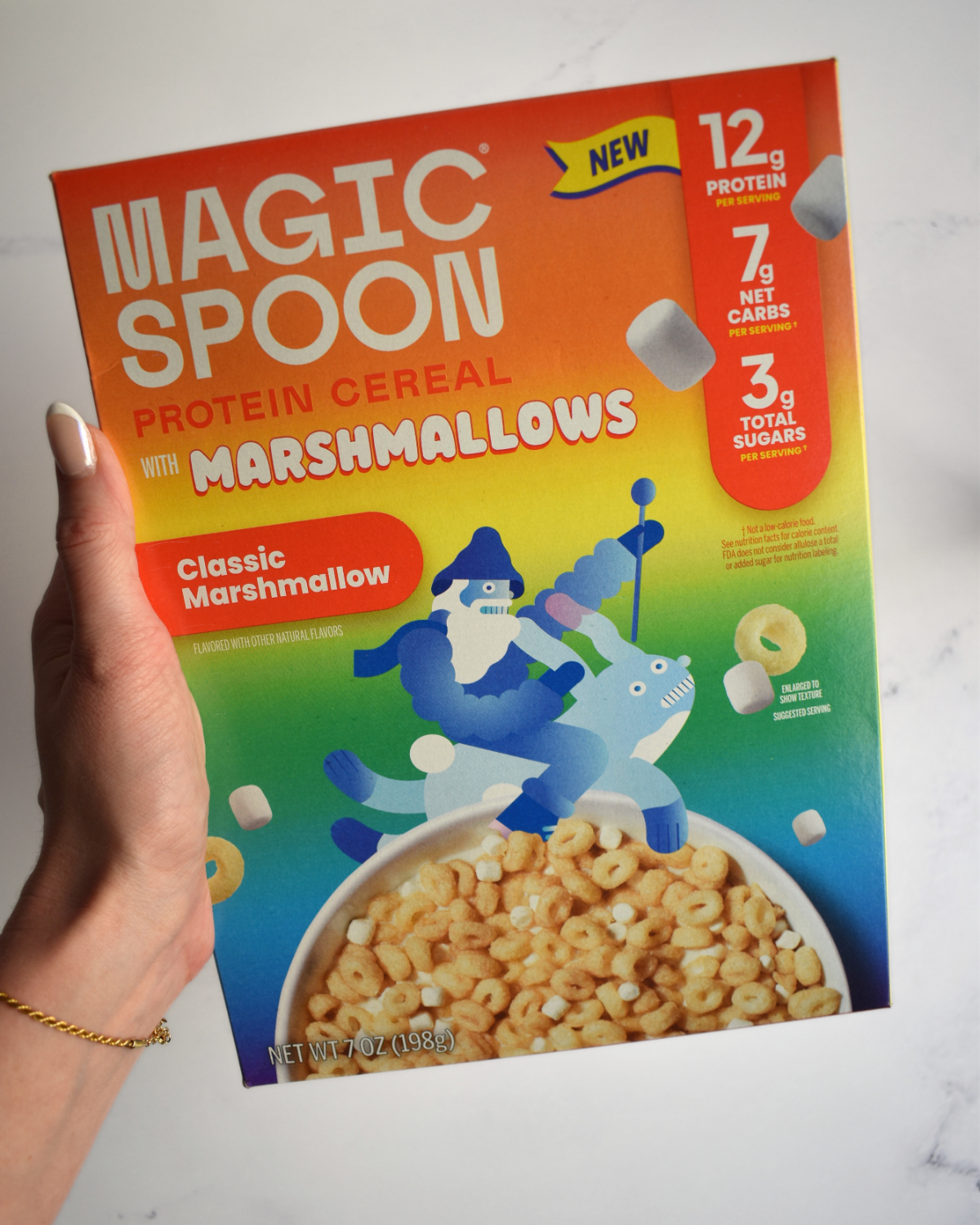
- Classic Marshmallow
- S’mores
- Fruity
- Cocoa
- Peanut Butter
- Blueberry Muffin
- Chocolate Chip Cookie
- Frosted
Most of the brand’s cereals are certified gluten-free, apart from the flavors that contain marshmallows.
In addition to cereals, Magic Spoon also sells other products with a high-protein twist, including oatmeals, treats, granolas, and pastries.
Magic Spoon cereal nutrition facts
Magic Spoon’s nutrition profile is one of its biggest selling points, and at first glance, the numbers do look pretty impressive. While many breakfast cereals are mostly carbohydrates and added sugar, Magic Spoon flips the script by packing each serving with protein while keeping the sugar and net carb content (aka the amount of carbs your body actually absorbs) low.
The exact nutrition facts vary slightly by flavor, but most Magic Spoon cereals provide around:
- 140-170 calories
- 12-14 grams of protein
- 4-5 grams of net carbohydrates
- 0 grams of total sugar
Protein is obviously the real star of the show here. With up to 14 grams per serving, Magic Spoon packs considerably more protein than most cereals, which often provide just a few grams per bowl. It also contains no total sugar, giving it an added edge over the colorful cereals it’s designed to imitate.
That said, it’s worth paying attention to the serving size. A serving weighs roughly 36–38 grams, depending on the flavor, which might look a little smaller in your bowl than you’d expect. If you’re a little generous when you pour your cereal, you could easily end up eating two (or more) servings without even realizing it.
Another important point: Magic Spoon is low in net carbs, but that doesn’t automatically make it a nutritional home run for everyone. Compared with whole-grain cereal, it offers less fiber and relies more heavily on specialty ingredients to recreate that familiar sweet, crunchy experience.
Still, if protein and sugar are your main priorities, its nutrition profile is undeniably impressive.
Magic Spoon cereal ingredients
Magic Spoon doesn’t use the usual lineup of corn, wheat, rice, or oats found in most breakfast cereals. Instead, it relies on a combination of milk proteins, starches, oils, fiber, and alternative sweeteners to create its signature crunchy loops.
The exact ingredient list varies by flavor, but most varieties include:
- Milk protein blend: Whey protein concentrate and casein are responsible for the cereal’s high protein content. These are complete proteins that provide all nine of the essential amino acids your body needs.
- Tapioca starch: This grain-free starch helps give the cereal its shape and crunchy texture.
- Oil blend: Magic Spoon uses high-oleic sunflower oil and avocado oil.
- Allulose and monk fruit: These ingredients provide sweetness without adding the amount of sugar found in traditional cereals. Allulose is a type of rare sugar, while monk fruit is a plant-derived, high-intensity sweetener.
- Chicory root inulin: Inulin is a prebiotic fiber that adds a little fiber to the cereal, though it can cause gas or bloating in some people.
- Natural flavors and colors: Depending on the flavor, Magic Spoon may contain cocoa powder, peanut flour, peanut extract, vegetable juice, turmeric extract, or spirulina extract.
- Salt: A small amount is included to help balance the sweetness and bring out the flavor.
It’s great that the ingredient list skips artificial colors, flavors, and sweeteners. However, Magic Spoon is still a highly processed cereal made with several specialty ingredients, so I wouldn’t necessarily consider it nutritionally superior to a minimally processed, whole-grain cereal across the board.
It offers more protein and less sugar, but most varieties aren’t particularly rich in fiber or whole grains.
Additionally, because whey and casein are both derived from milk, Magic Spoon cereal is not vegan or dairy-free. The Peanut Butter flavor also contains peanuts, and the Classic Marshmallow is made with gelatin, so anyone with food allergies or other dietary restrictions should check the individual box carefully before buying.
Stay in the loop!
Healthy eating tips & recipes delivered directly to your inbox
Is Magic Spoon healthy?
Magic Spoon can be a healthy cereal choice, but it really comes down to what you’re looking for.
It’s high in protein, contains no added sugar, and is low in carbs, making it a filling alternative to many popular cereals. It can be especially useful if you struggle to squeeze enough protein into breakfast or want something sweet without starting your morning with a hefty dose of added sugar.
However, the numbers on the nutrition label don’t tell the entire story.
Magic Spoon is highly processed and contains little fiber, while many whole-grain cereals provide more fiber, vitamins, minerals, and complex carbohydrates. Its allulose, monk fruit, and chicory root inulin can also cause digestive discomfort for some people, especially when eaten in larger amounts.
In my opinion, Magic Spoon is a perfectly reasonable option to keep in your breakfast rotation, but I wouldn’t put a health halo around it simply because it’s high in protein and sugar-free.
For a more balanced bowl, pair it with fresh fruit for extra fiber and nutrients. And if you genuinely enjoy whole-grain cereal, there’s no need to trade it in just because it contains a few more carbs.
Cost and availability
There’s no getting around it: Magic Spoon is expensive. On the company’s website, a four-box variety pack costs $39, which works out to $9.75 per box or about $1.95 per serving. Each seven-ounce box contains only around five servings, so it can disappear surprisingly fast.
Magic Spoon also offers a subscription that saves 20%, bringing the cost of a four-box pack down to $31.20, or $7.80 per box and about $1.56 per serving. You can choose your flavors and adjust, skip, or cancel future deliveries, so the subscription offers some flexibility if Magic Spoon becomes a regular fixture in your pantry.
If you don’t want to commit to four boxes or just want to give it a try, certain flavors are also sold individually at major retailers, including Target and Walmart. Prices vary by store and flavor, but a seven-ounce box generally costs around $8-$9. The company also has an online store locator that can help you find retailers near you.
Buying in-store is probably the best way to test one flavor before dropping nearly $40 on a bundle. However, the Magic Spoon website typically offers the widest flavor selection, along with variety packs and limited-edition options.
My experience trying Magic Spoon cereal
On paper, Magic Spoon sounds almost too good to be true: delicious cereal flavors, plenty of protein, and zero sugar.
But cereal is one of those foods where the nutrition label only tells you so much. In fact, taste, texture, sweetness, and satiety can make or break the entire bowl.
I tried three different flavors — including Fruity, Cocoa, and Classic Marshmallow — to see how they stacked up, whether they actually tasted like the childhood classics that inspired them, and, most importantly, whether I’d willingly go back for another bowl.
Taste
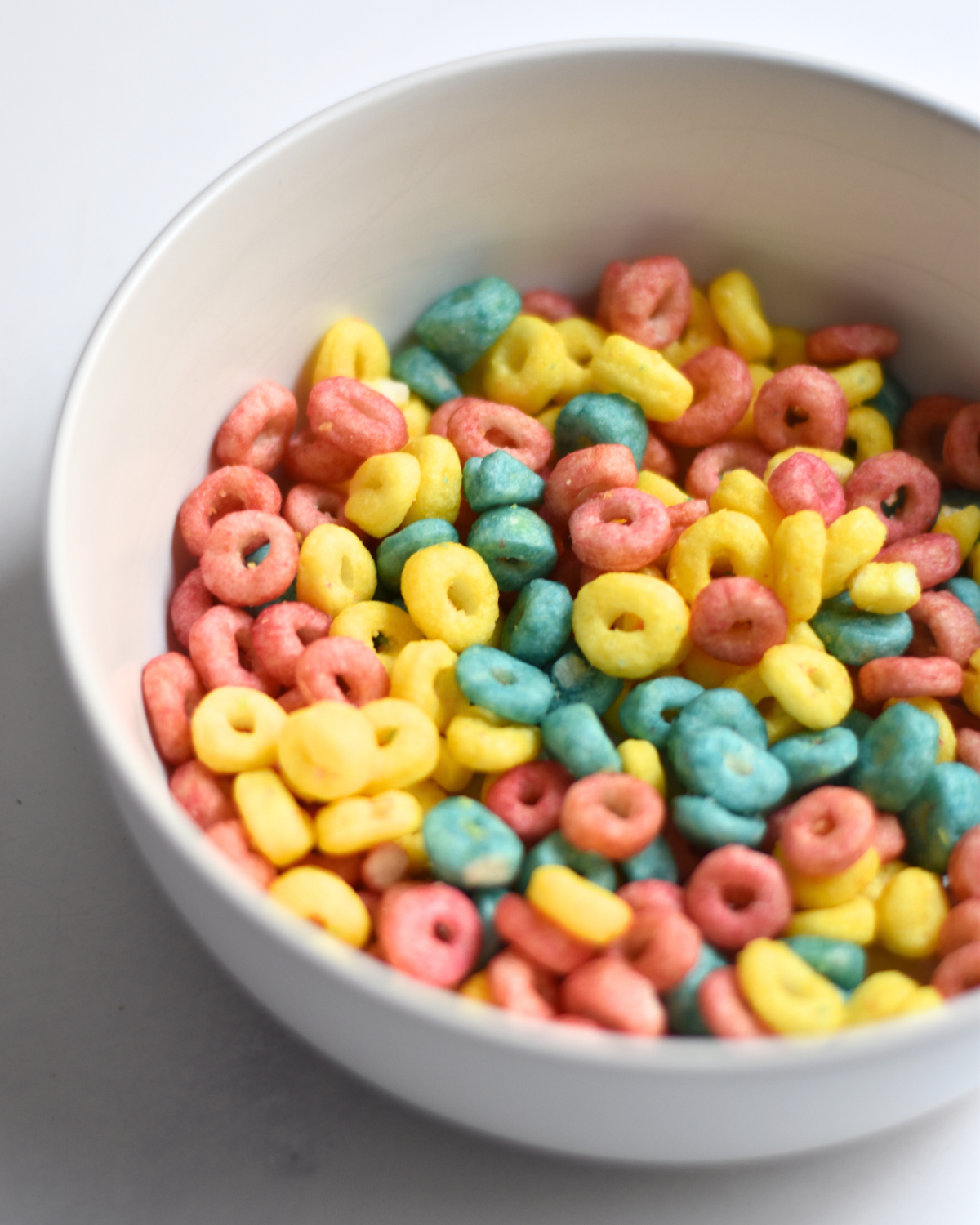
I was pleasantly surprised by how closely the Magic Spoon flavors resembled the regular cereals that inspired them.
They were sweet, fun, and definitely delivered on flavor, but each one also had a distinct aftertaste from the alternative sweeteners. It wasn’t overpowering, but it was noticeable enough to remind me that I wasn’t eating the original.
Of the flavors I tried, Fruity was probably my favorite. It had a bright, fruity flavor and came the closest to capturing that classic Froot Loops flavor. Classic Marshmallow and Cocoa were also pretty good, though they tasted a bit more artificial to me.
Ultimately, Magic Spoon cereal could be a good option if you want a sugar-free, high-protein alternative to regular cereal or need something that works with a low-carb or gluten-free diet. For me, though, the flavor wasn’t quite good enough to earn a permanent spot in my regular breakfast rotation.
Texture
Magic Spoon delivered a satisfying crunch and held up surprisingly well in milk without quickly turning into a soggy mess (my biggest pet peeve with cereal!).
That said, the texture was noticeably chalkier than traditional cereal and left a bit of residue on my teeth after each bite.
It wasn’t necessarily a dealbreaker, but it definitely kept the cereal from feeling like a true one-to-one match for the originals.
Satiety
One of the main reasons to choose a protein cereal is the promise that it will keep you full longer than the average bowl, so I was especially curious to see how Magic Spoon measured up.
Surprisingly, Magic Spoon actually managed to keep me satisfied for a decent amount of time after breakfast, likely thanks to its protein content.
On the flip side, because most flavors contain relatively little fiber, it wasn’t quite as filling as a more well-rounded breakfast with a balance of protein, fiber, and healthy fats.
While it can be a quick grab-and-go option as is, I think adding fruit, nuts, or seeds could help give the bowl a little more staying power.
Would I recommend it?
After trying Magic Spoon for myself, I do think it might be worth grabbing a box or two if you’re looking for a higher-protein, lower-sugar alternative to traditional cereal, especially if you follow a low-carb or gluten-free diet.
However, its high price tag and lack of fiber may be deterrents for some people, and the taste and texture probably won’t fool you into thinking it’s exactly like the original.
There are also several similar brands out there, which offer high-protein, low-sugar cereals with more fiber, fewer highly processed ingredients, or a lower price tag (more on those below!).
Personally, I’d recommend enjoying Magic Spoon as an occasional breakfast rather than making it an everyday staple.
Who should try Magic Spoon?
Magic Spoon won’t be the perfect match for every cereal lover, but it fills a pretty specific niche. It’s best suited for people who want the convenience of cereal while prioritizing protein intake or limiting added sugar or carbs.
Magic Spoon might be worth trying if you:
- want more protein at breakfast
- are trying to cut back on added sugar
- follow a low-carb or keto diet
- miss the cereals you ate as a kid
- need a quick, convenient breakfast
- don’t mind paying for specialty products
On the flip side, you might want to skip Magic Spoon if you:
- are shopping on a budget
- prefer whole-grain or minimally processed cereals
- want a high-fiber breakfast
- are sensitive to alternative sweeteners or inulin
- avoid dairy
- expect it to taste exactly like traditional cereal
Pros and cons
After weighing everything from the protein content to the price tag, here’s a quick look at where Magic Spoon shines and where it falls a little flat.
Pros:
- High in protein: Each serving provides 12-14 grams of complete protein.
- Sugar-free: The original protein cereals contain zero grams of total sugar.
- Low in carbs: Most flavors contain just 4-5 grams of net carbs per serving, which is great if you’re following a low-carb or ketogenic diet.
- Quick and convenient: All you need is a bowl, milk, and about 30 seconds to make a tasty breakfast!
- Plenty of variety: Magic Spoon comes in a wide selection of fun, nostalgic flavors.
- Gluten-free options: Most of the original protein cereals are certified gluten-free.
- Satisfying crunch: The cereal holds up well in milk without immediately getting soggy.
- Easy to find: Magic Spoon is widely available, both online and at major retailers like Target and Walmart.
Cons:
- Expensive: Magic Spoon costs considerably more than most traditional cereals, which might not work if you’re on a tight budget.
- Small boxes: Each seven-ounce box contains only around five servings.
- Low in fiber: Most original flavors provide relatively little fiber compared with many whole-grain cereals.
- Highly processed: The cereal relies on several specialty ingredients to achieve its high-protein, low-carb nutrition profile.
- Potential digestive effects: Allulose and chicory root inulin can cause gas, bloating, or other digestive discomfort in some people.
- Contains dairy: The original protein cereals contain whey and casein, making them unsuitable for vegans and people with milk allergies.
- Possible aftertaste: Monk fruit and allulose may leave a noticeable aftertaste for people who are sensitive to alternative sweeteners.
- Different from traditional cereal: Its protein-heavy base gives it a taste and texture that don’t perfectly match the childhood classics.
Magic Spoon vs. other high-protein cereals
Magic Spoon isn’t the only cereal that promises to squeeze more protein into your morning meal. Competitors like Catalina Crunch, Three Wishes, and Premier Protein each offer their own spin on high-protein cereal, but there are some pretty big differences in terms of protein, fiber, sugar, ingredients, and price.
Here’s a closer look at how a popular flavor from each brand compares:
| Magic Spoon Fruity | Catalina Crunch Cinnamon Toast | Three Wishes Cinnamon | Premier Protein Mixed Berry Almond | |
|---|---|---|---|---|
| Serving size | 1 cup | 1/2 cup | 1 cup | 1 cup |
| Calories | 150 | 150 | 130 | 180 |
| Protein | 13 g | 11 g | 8 g | 20 g |
| Fiber | 1 g | 6 g | 3 g | 1 g |
| Sugar | 0 g | 0 g | 3 g | 5 g |
| Price | $9.75 per box | $7-$8 per bag | ~$7 per box | ~$7 per box |
| Best for | nostalgic flavors with no sugar | high protein and fiber with no sugar | a vegan cereal with a shorter ingredient list | getting the most protein per serving |
Magic Spoon lands somewhere in the middle for protein, offering more than Three Wishes but less than Premier Protein.
It also contains no sugar and provides a full one-cup serving, whereas Catalina Crunch lists a much smaller half-cup serving. That difference matters when you’re comparing the numbers or picturing how much cereal will actually end up in your bowl.
Catalina Crunch is the clear winner for fiber, while Premier Protein packs the most protein at 20 grams per serving.
Three Wishes provides less protein but is dairy-free, vegan, and made primarily from chickpeas, tapioca, and pea protein.
Magic Spoon, meanwhile, stands out for its wide range of nostalgic flavors and impressively low sugar content, though it’s also the most expensive option of the bunch.
Ultimately, the best choice depends on your priorities. Magic Spoon may be the most appealing if you want the classic cereal experience with extra protein and no sugar. Catalina Crunch offers a stronger protein-and-fiber combination, Three Wishes is the best fit for plant-based eaters, and Premier Protein gives you the biggest protein bang for your bowl.
FAQ
More reviews for you
Marley Spoon Review: I Tried It—Here’s What I Thought
Culture Pop Review: Is This Probiotic Soda Healthy?
LMNT Electrolytes Review: Is It Worth It? A Dietitian Weighs In
Protein Pop Review: A Dietitian’s Take on Ingredients, Nutrition, and Taste
Hungryroot Review: I Tried It to See If It’s Worth the Hype
MISFITS Protein Bars Review: A Dietitian’s Honest Take
Conclusion
Magic Spoon delivers an impressive amount of protein with no sugar, all wrapped up in the fun, nostalgic flavors of your childhood favorites.
However, its high price tag, small serving count, and alternative sweeteners mean it won’t be the right fit for everyone.
If you’re curious, I’d recommend starting with a single box from a local retailer before committing to a multipack or subscription.
Additionally, consider enjoying it as a fun pantry splurge rather than letting it replace other nutritious breakfast foods, such as fruit, yogurt, oatmeal, or whole-grain cereal.