Jujube Fruit Benefits, Side Effects, and Uses
Quick summary
Until recently, I had no idea that the tree growing in our backyard was actually a jujube tree. Once I figured it out, I naturally had a lot of questions: What exactly is a jujube? How do you eat it? And, most importantly, had I been overlooking free fruit this entire time?
That discovery sent me down a research rabbit hole to learn more about jujube fruit benefits and side effects. Also known as Chinese dates, these little fruits have been enjoyed for thousands of years and have a long history of use in traditional Chinese medicine. They can be eaten fresh or dried and pack a surprising amount of vitamin C into each serving.
In this article, we’ll dig into jujube nutrition, potential health benefits, safety considerations, and a few easy ways to eat it. Whether you have a mystery tree in your backyard too or simply spotted jujubes at the store and got a little curious, here’s everything you need to know!
What is jujube fruit?
Jujube is a small, sweet fruit that goes by several other names, including:
- Chinese date
- red date
- Chinese jujube
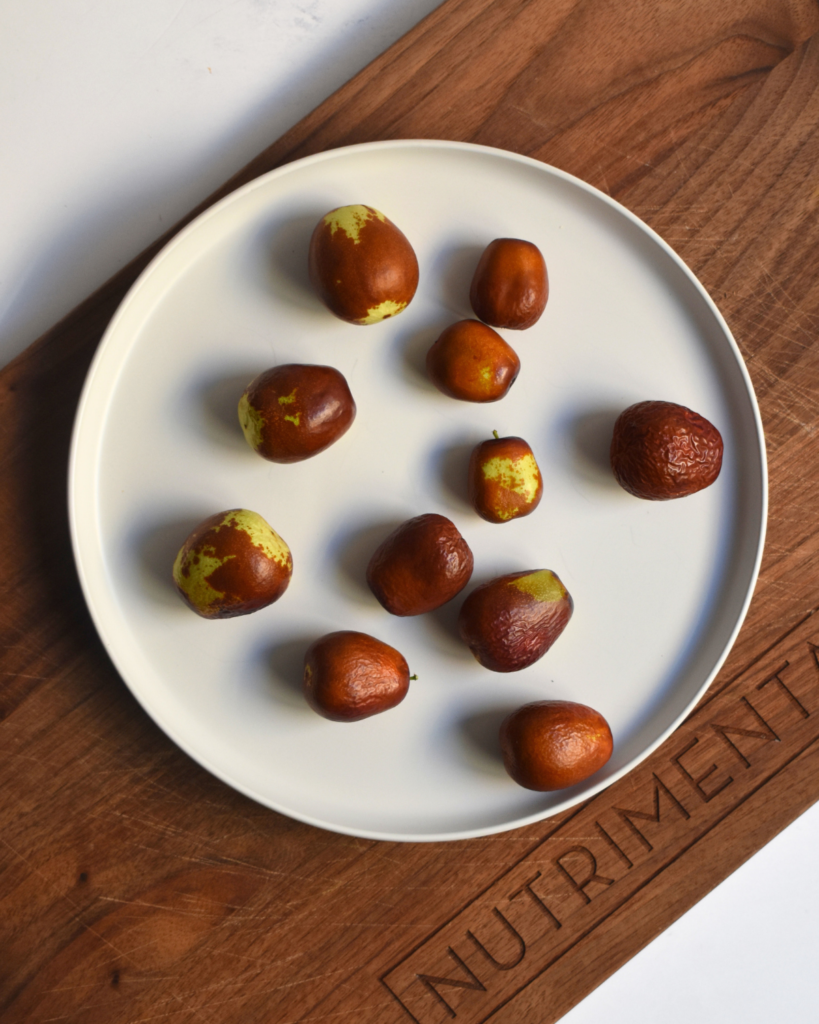
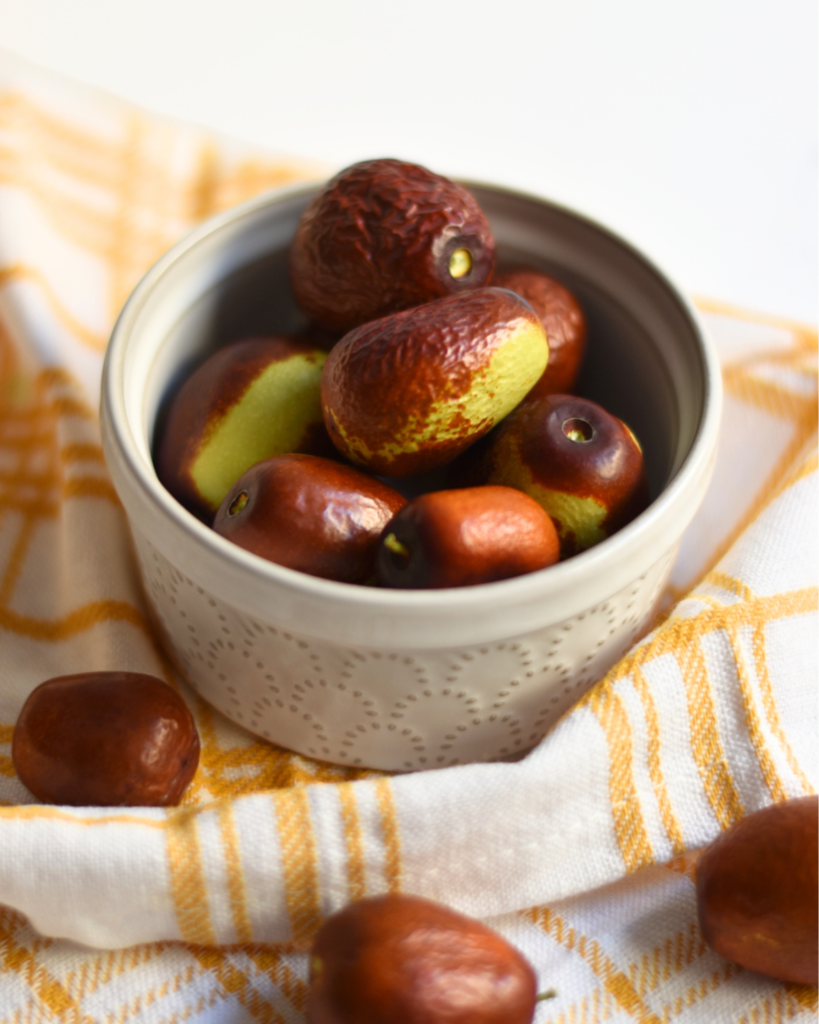
But despite some of its nicknames, it isn’t actually a date at all. In fact, while fresh dates are soft and moist, fresh jujubes are crisp and juicy with a mildly sweet flavor, a lot like a mini apple. As they ripen, they turn from green to reddish-brown and become softer and sweeter.
Jujube fruit originated in China, where it’s been cultivated for thousands of years and has a long history of use in traditional Chinese medicine. Today, you can find it fresh, dried, or incorporated into teas, powders, supplements, and desserts.
Fresh jujubes can be a little tricky to track down in the United States, but dried versions are often available at Asian markets, specialty grocery stores, and online. Dried jujubes have a chewy texture and concentrated sweetness similar to dates, making them an easy snack or a tasty addition to oatmeal, baked goods, soups, and tea.
Jujube fruit nutrition facts
Jujube may be small, but it provides many important nutrients, including fiber, potassium, and vitamin C. It also contains several antioxidant compounds, including flavonoids and polyphenols.
A 3.5-ounce (100-gram) serving of fresh jujube provides the following nutrients:
- Calories: 79
- Carbs: 20.2 grams
- Protein: 1.2 grams
- Fat: 0.2 grams
- Vitamin C: 69 milligrams (77% of the DV, or Daily Value)
- Copper: 0.073 milligrams (8% of the DV)
- Niacin: 0.9 milligrams (6% of the DV)
- Potassium: 250 milligrams (5% of the DV)
Keep in mind that dried jujube offers a slightly different set of nutrients. Because removing the water concentrates its calories, carbohydrates, and natural sugars, your portions sizes matter a little more. Some packaged varieties are also sweetened, so remember to check the ingredient list for added sugar.
Stay in the loop!
Healthy eating tips & recipes delivered directly to your inbox
Potential benefits of jujube fruit
Jujube has been used in traditional Chinese medicine for thousands of years, but how does it hold up under the scientific spotlight these days? Even though research is still constantly emerging, this little fruit offers several nutrients and a few pretty impressive perks.
1. It’s high in vitamin C
Jujube is surprisingly high in vitamin C, packing around 77% of the DV into a 3.5-ounce serving.
To put that into perspective, that’s even more than oranges, which provide just under 66% of the DV for the same serving size.
Vitamin C plays a key role in everything from immune function to iron absorption (and so much more!). It’s also essential for the production of collagen, a type of protein that keeps your skin, joints, and bones healthy.
2. It’s a great source of antioxidants
Jujube contains several antioxidants, including vitamin C, flavonoids, and polyphenols.
Antioxidants help neutralize free radicals, ease inflammation, and protect your cells against oxidative stress. Studies show that antioxidants could also be a powerful tool to help protect against chronic conditions like diabetes, cancer, and heart disease.
While that doesn’t make jujube a magic shield against disease, it does mean that it can be a nutritious addition to your fruit rotation.
3. It may promote digestion
Jujube contains fiber, which promotes regularity and supports the beneficial bacteria in your gut (aka your gut microbiome).
This is a big deal, because your microbiome plays a role in so much more than digestion, influencing everything from immune function and metabolism to inflammation and even mood.
That said, much of the research on jujube and gut health has involved animals or concentrated extracts, so it’s hard to draw definitive conclusions on just how beneficial it might be.
4. It could help you sleep better
Jujube has a long history of use as a natural sleep aid, especially in traditional Chinese medicine.
Some early research suggests that certain compounds in jujube seeds may have calming or sedative effects. This is likely thanks to their ability to boost gamma-aminobutyric acid (GABA), a chemical in your brain that slows down nerve activity to ease anxiety and promote sleep.
Interestingly, one study in postmenopausal women found that taking 250 milligrams of jujube seed extract twice daily significantly improved sleep quality after just three weeks.
Still, most studies have focused on seed extracts rather than the whole fruit, which means that a handful of jujubes before bed isn’t guaranteed to have you snoozing in minutes.
5. It might support metabolic health
Promising research suggests that jujube could have beneficial effects on blood sugar, cholesterol, and triglyceride levels.
For example, one eight-week study found that eating dried jujube powder reduced belly fat, lowered triglyceride levels, and improved HDL (“good”) cholesterol levels in people with metabolic syndrome.
Other research shows that it could help your cells use sugar more effectively, improve insulin sensitivity, and decrease the production and buildup of fat.
But while these findings are promising, studies in humans are still pretty limited. Jujube should be viewed as one (very nutritious) piece of the puzzle rather than a replacement for meds or other treatments.
Jujube fruit side effects and precautions
For most people, enjoying jujube fruit in moderation is generally pretty safe. Still, eating too much at once could cause digestive issues like gas, bloating, or diarrhea, especially if your body isn’t used to fiber-rich foods.
Dried jujube also deserves a quick label check. Drying concentrates the fruit’s natural sugar and calories, and some packaged varieties pile on even more added sugar too. Look for an ingredient list that’s short and sweet (not literally, of course) and keep your portion sizes in check if you’re monitoring your blood sugar or carbohydrate intake.
Jujube may also impact your blood sugar levels, so talk to your doctor before using concentrated extracts or supplements if you take medication for diabetes. Anyone who is pregnant, breastfeeding, or taking prescription medications should also check in with their doctor first before trying jujube supplements.
Finally, don’t eat the hard pit in the center of the fruit. Even though jujube seed extracts are used in some supplements and studies, the whole pit can be a choking hazard and isn’t meant to be eaten as is.
How to eat jujube fruit
Fresh jujubes can be eaten just like a tiny, delicious apple: give them a good rinse, bite into the crisp flesh, and toss out the hard pit in the center. They have a mildly sweet flavor that becomes richer as the fruit ripens and changes from green to reddish-brown.
Dried jujubes are chewier and sweeter, making them an easy snack straight from the bag. Just remember to remove the pit if they haven’t already been pitted.
You can also slice or chop jujubes and add them to all sorts of meals and snacks. Here are a few fun ways to use both fresh and dried jujube fruit:
- stir sliced fresh or chopped dried jujube into overnight oats
- mix fresh or dried jujube into yogurt parfaits or cottage cheese bowls
- add chopped fresh jujube to salads
- toss dried jujube into homemade trail mix with nuts, seeds, and other dried fruits
- simmer dried jujube in tea for a hint of sweetness
- chop fresh or dried jujube and add it to muffins, quick breads, or energy bites
- use dried jujube in place of dates or raisins in certain recipes
For a more filling snack, pair jujube with a source of protein or fat, like nuts, nut butter, yogurt, or cheese. And if you’re buying dried jujube, always check the label for added sugar. The fruit is already plenty sweet on its own!
FAQ
More healthy fruits & veggies
Benefits of Raspberries: Nutrition, Uses, and More
Swiss Chard: Benefits, Nutrition, and Easy Ways to Eat It
Benefits of Kiwi: 6 Science-Backed Reasons to Add More Kiwi to Your Diet
Spinach vs. Kale Nutrition: Which Is Healthier?
Cabbage for Gut Health: Benefits, Nutrition, and How to Eat It
Avocado Nutrition, Benefits, and Recipes
Strawberry Nutrition Facts and Benefits, Plus Healthy Ways to Use Them
Conclusion
Jujube might not be the most familiar fruit in the produce aisle, but it has plenty to offer.
From its impressive vitamin C content to its potential benefits for digestion, sleep, and metabolic health, there are several reasons to give it a try.
When weighing jujube fruit benefits and side effects, enjoying fresh or unsweetened dried jujube as part of a balanced diet is a simple (and tasty!) place to start.