Olipop vs. Poppi: Which Prebiotic Soda Is Healthier? A Dietitian’s Review
Quick summary
Olipop and Poppi are just about everywhere these days, from social media stories to supermarket shelves. These colorful canned drinks have both exploded in popularity over the last few years, thanks to their promise of delivering the fizzy satisfaction of soda while sneaking in some extra health perks.
But when it comes to Olipop vs. Poppi, which one is actually healthier? As a dietitian and fizzy drink lover, I wanted to look beyond the unique flavors and clever marketing claims to compare their nutrition facts, ingredients, fiber content, and potential benefits.
I also put both brands to the test with a taste comparison to see how they stack up in the flavor department. Because while a healthier soda sounds great in theory, the real question is: which one would you actually want to drink?
Read on for my full Olipop vs. Poppi comparison, where I break down the nutrition, ingredients, price, and (most importantly) how they actually taste.
What are Olipop and Poppi?
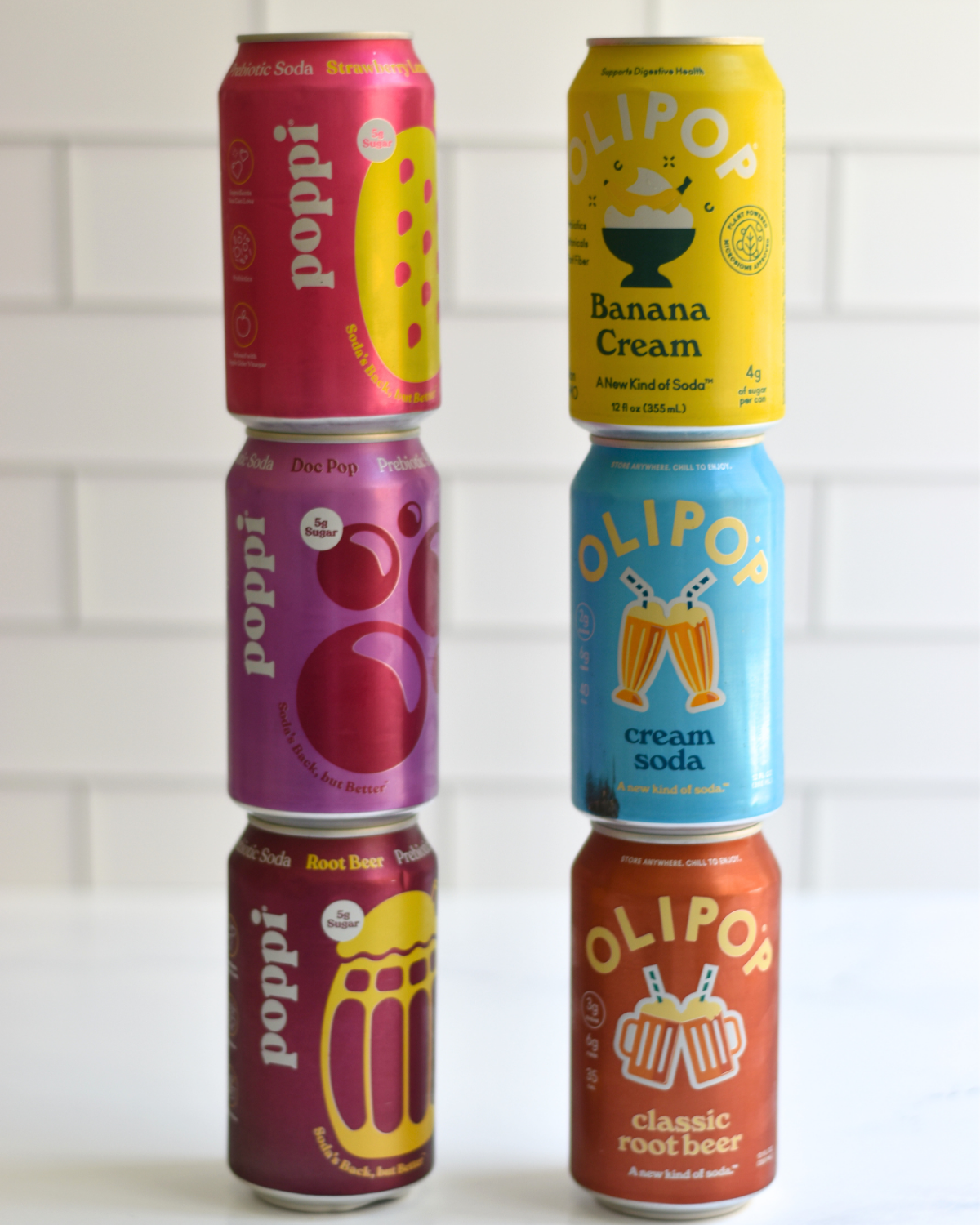
Both Olipop and Poppi are considered prebiotic sodas, which are beverages designed to support gut health while containing less sugar than traditional soft drinks. Rather than relying on large amounts of added sugar, they use a combination of sweeteners and functional ingredients to create soda-inspired flavors with fewer calories.
At first glance, Olipop and Poppi both seem pretty similar. They both come in fun flavors, market themselves as healthier alternatives to soda, and contain ingredients intended to keep your gut happy. But once you take a closer look, there are some notable differences in terms of nutrition, ingredients, and taste.
Olipop contains a blend of prebiotic fibers and botanical ingredients, including chicory root fiber, Jerusalem artichoke inulin, cassava root fiber, and various plant extracts. One of its biggest selling points is its fiber content, with many flavors providing 6 to 9 grams of fiber per can.
On the flip side, Poppi is built around a combination of fruit juice, sparkling water, and apple cider vinegar. While it also contains prebiotic fiber, most flavors provide a lot less fiber than Olipop. Compared to Olipop, Poppi is generally lower in calories and has a lighter, more traditional soda-like taste.
Olipop vs. Poppi at a glance
Even though Olipop and Poppi are both marketed as healthier alternatives to soda, they differ quite a bit when it comes to nutrition and ingredients. Here’s a quick side-by-side look at how they stack up.
| Olipop | Poppi | |
|---|---|---|
| Calories | 35-50 | 20-35 |
| Fiber | 6-9 grams | 2 grams |
| Added sugar | 2-5 grams | 3-5 grams |
| Total Sugar | 2-5 grams | 4-5 grams |
| Main functional ingredients | prebiotic fibers, botanicals, and plant extracts | apple cider vinegar, fruit juice, and prebiotic fiber |
| Sweeteners | stevia, cassava root syrup, and fruit juice concentrates | stevia and fruit juice concentrates |
| Gut health focus | prebiotic fiber blend | apple cider vinegar and prebiotic fiber |
| Caffeine options | yes, select flavors | yes, select flavors |
| Typical price | $2.50-$3.00 per can | $2.00-$2.50 per can |
A quick note: nutritional information varies by flavor and can change over time. The values above represent typical ranges across each brand’s current product lineup.
Stay in the loop!
Healthy eating tips & recipes delivered directly to your inbox
Nutrition Comparison
On the surface, Olipop and Poppi both seem pretty similar. But once you flip over the can and start reading the nutrition facts and ingredient list, you’ll see some differences that could influence which one earns a spot in your shopping cart.
Calories
Both Olipop and Poppi are much lower in calories than regular soda, making either one a smart choice if you’re looking to lose weight or cut back on sugary drinks.
That said, Poppi has a slight edge here. Most Olipop flavors contain between 35 and 50 calories per can, while Poppi flavors typically range from 20 to 35 calories per can. Of course, the exact amount varies by flavor, but Poppi generally comes out a little lower.
Regardless, the difference really isn’t dramatic. For example, choosing a 50-calorie Olipop instead of a 25-calorie Poppi only adds about 25 calories, which is roughly the amount found in half a small banana.
In my opinion, that’s not enough of a difference to make or break your decision, especially when there are other nutritional factors worth considering.
Sugar and sweeteners
One of the biggest selling points of both Olipop and Poppi is that they contain far less sugar than soda.
To put it into perspective, a 12-ounce can of Coca-Cola often packs around 31 grams of sugar, whereas most flavors of Olipop and Poppi contain less than 5 grams, or about one-sixth as much.
Olipop typically contains 2 to 5 grams of sugar per can, while Poppi generally contains 4 to 5 grams. Both brands use a combination of sweeteners to keep sugar levels low while maintaining a sweet, soda-like flavor.
Olipop is sweetened with ingredients like cassava root syrup, stevia leaf extract, and fruit juice concentrates, whereas Poppi relies primarily on stevia and fruit juice concentrates.
Because stevia is so much sweeter than sugar, both brands can achieve a sweet taste without adding massive amounts of sugar or calories.
From a nutrition standpoint, neither product contains enough added sugar to be a major concern for most people, and both are great alternatives to soda or other sugary drinks.
Fiber content
If there’s one category where Olipop and Poppi really start to separate themselves, it’s fiber.
Most Olipop flavors contain 6 to 9 grams of fiber per can, while Poppi usually contains closer to 2 grams. That’s actually a pretty big difference, especially considering that most people fall short on daily fiber intake.
Fiber is important for keeping your gut healthy, stabilizing blood sugar levels, supporting heart health, and helping you feel full after meals.
Health experts recommend aiming for 25 grams per day for women and 38 grams of fiber per day for men. However, studies show that only about 5% of Americans actually manage to hit these targets.
An important caveat: that definitely doesn’t mean you should rely on soda to meet your fiber needs, especially because whole plant foods like fruits, veggies, whole grains, and legumes provide fiber along with a variety of other beneficial nutrients.
But at the end of the day, if you’re choosing between these two beverages, the extra fiber in Olipop is a meaningful nutritional advantage.
Ingredients
Even though both brands are considered prebiotic sodas, they take different approaches to creating their signature formulas.
Olipop is built around a blend of prebiotic fibers, plant extracts, and botanical ingredients.
Many flavors contain a combination of ingredients like chicory root fiber, cassava root fiber, Jerusalem artichoke inulin, and resistant starch, which are carbs that aren’t fully digested and instead provide fuel for the beneficial bacteria in your gut.
Olipop also includes various botanicals depending on the flavor, such as marshmallow root, calendula flower, and kudzu root.
Poppi, on the other hand, is centered around apple cider vinegar, plus fruit juice and prebiotic fiber from agave inulin.
While apple cider vinegar has become popular for its potential health perks (especially for weight management and blood sugar control), the amount found in Poppi is pretty small compared with what’s typically studied in research.
Because it provides a more substantial source of prebiotic fiber and includes a wider variety of functional ingredients, Olipop earns the win when it comes to ingredients. However, Poppi may be a better fit if you prefer a short and sweet ingredient list or enjoy the flavor profile of apple cider vinegar-based drinks.
Which is healthier?
After comparing the nutrition facts, ingredients, and potential health benefits, Olipop comes out ahead as the healthier choice.
The biggest reason is its fiber content. With around 6 to 9 grams of fiber per can, Olipop packs about 3 to 4 times as much prebiotic fiber as Poppi. Since fiber is an important nutrient that many people don’t get enough of, this gives Olipop an upper hand.
Olipop also tends to contain a little less sugar, though the difference between the two brands is relatively small.
When it comes to calories, Poppi contains slightly less, but the difference is minimal and likely not a deciding factor for most people.
That said, “healthier” doesn’t mean one brand is right for everyone. If you prefer a lighter, more traditional soda taste or want the lowest-calorie option, Poppi may be the better choice.
Ultimately, both Olipop and Poppi can be fun alternatives to regular soda. The best choice is the one you like drinking and that fits into your lifestyle.
Price comparison
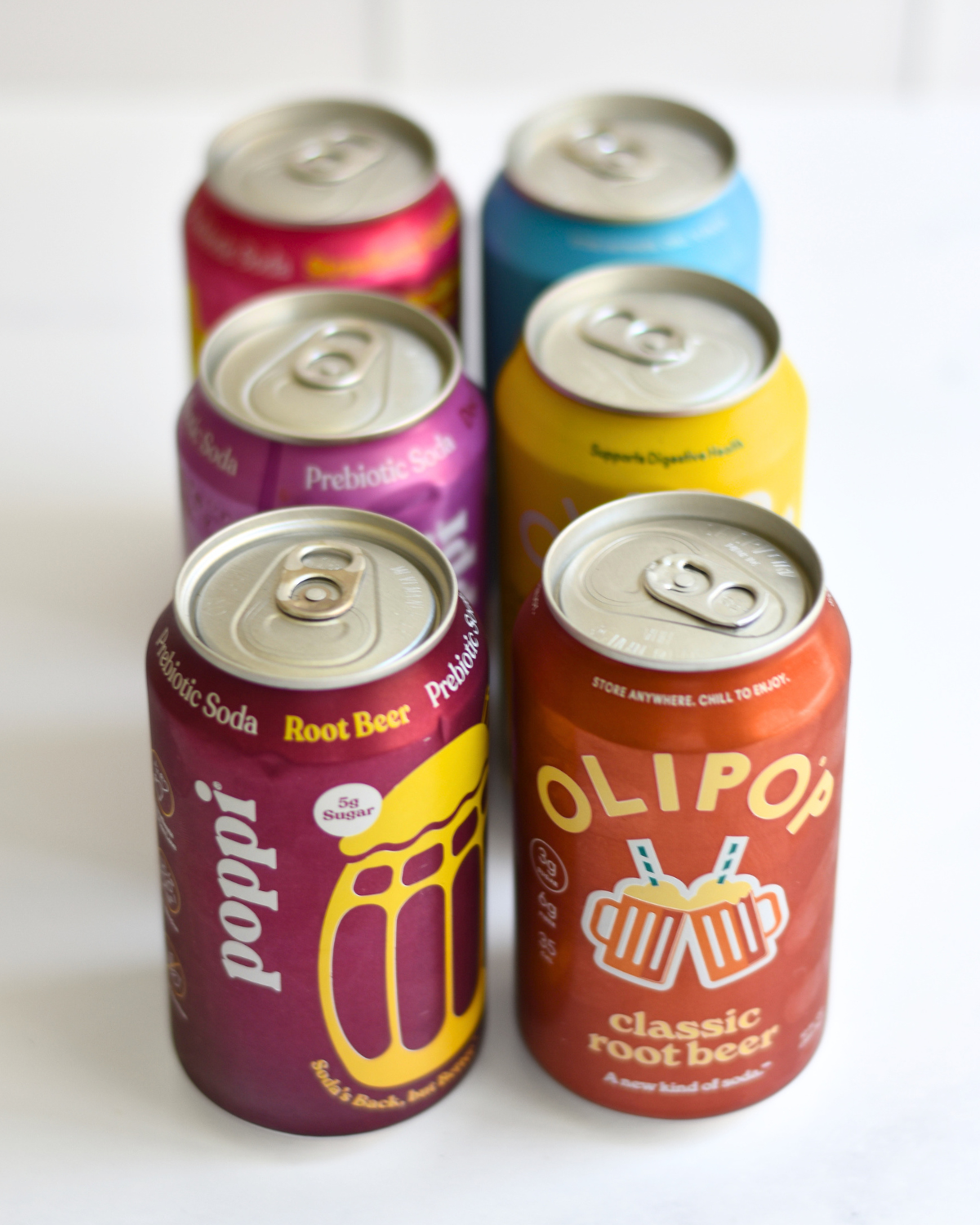
One big downside of both Olipop and Poppi is that they’re quite a bit pricier than the average can of soda.
While they can be a fun upgrade from regular soft drinks, the cost can add up fast, especially if you’re drinking them regularly.
Both brands typically cost around $2 to $3 per can, depending on where you buy them and whether you purchase single cans or multipacks.
Olipop tends to be slightly more expensive, often landing around $2.50 to $3 per can, while Poppi is usually closer to $2 to $2.50 per can.
Of course, prices can vary based on the retailer, and buying larger packs online or during sales can help lower the cost per can.
Compared with a traditional soda, both brands are definitely a splurge, but Poppi is slightly more affordable. However, some people may find the extra fiber and lower sugar content of Olipop worth the higher price tag.
Olipop vs. Poppi pros and cons
When comparing Olipop vs. Poppi, both prebiotic sodas have their own unique perks and drawbacks. Here’s a quick look at the pros and cons of each to help you decide which is right for you.
Olipop
Pros
- Higher in fiber: Most cans contain 6 to 9 grams of fiber, making Olipop a stellar source of prebiotic fiber.
- Lower in sugar: Many flavors contain just 2 to 5 grams of sugar per can.
- Contains a variety of plant-based ingredients: Olipop includes prebiotic fibers, botanicals, and plant extracts to bolster its gut-health-focused formula.
- More filling: The higher fiber content may help make Olipop feel more satisfying than traditional soda.
- Wide variety of flavors: Olipop offers many classic soda-inspired flavors, including cola, root beer, cream soda, and cherry vanilla.
Cons
- More expensive: Olipop is often slightly pricier than Poppi.
- High fiber content may not work for everyone: The added prebiotic fiber can cause bloating or digestive discomfort for some people, especially if you’re not used to eating much fiber.
- Different texture: Some people notice that Olipop has a slightly thicker texture compared with traditional soda.
Poppi
Pros
- Lower in calories: Most flavors contain 20 to 35 calories per can.
- Light, refreshing taste: Poppi has a crisp, soda-like flavor that many people prefer.
- More widely available: Poppi is easier to find at many major retailers and grocery stores.
- Simple ingredient list: The formula is centered around sparkling water, fruit juice, apple cider vinegar, and prebiotic fiber.
- Fun flavor options: Poppi offers a variety of fruity flavors that may appeal to people who enjoy lighter beverages.
Cons
- Lower in fiber: With only about 2 grams of fiber per can, Poppi provides much less prebiotic fiber than Olipop.
- Health benefits may be overstated: While apple cider vinegar is a popular wellness ingredient, the amount in Poppi probably doesn’t provide the same effects seen in some studies.
- Slightly more sugar: Some flavors contain a bit more sugar than Olipop.
- Apple cider vinegar flavor isn’t for everyone: Some people may notice a subtle tanginess or vinegar-like aftertaste.
My honest taste test
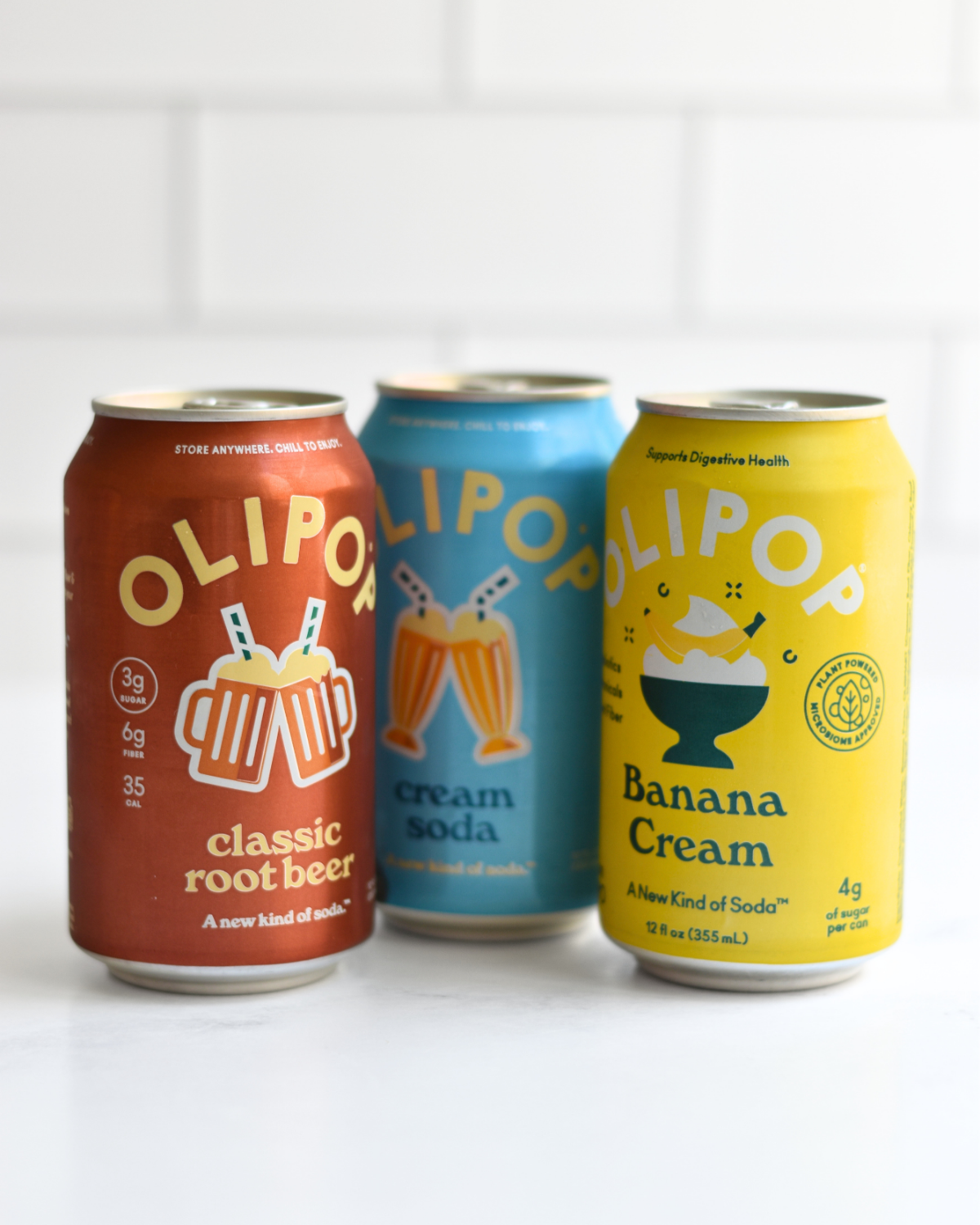
Nutrition is important, but let’s be real: if a prebiotic soda doesn’t taste good, you probably won’t want to buy it again, no matter how healthy it is. To see how these two brands compare beyond the nutrition facts label, I did a side-by-side taste test of three flavors from each brand.
For this taste test, I sampled three flavors from each brand, all served chilled.
Olipop flavors I tested included:
- Cream Soda
- Root Beer
- Banana Cream
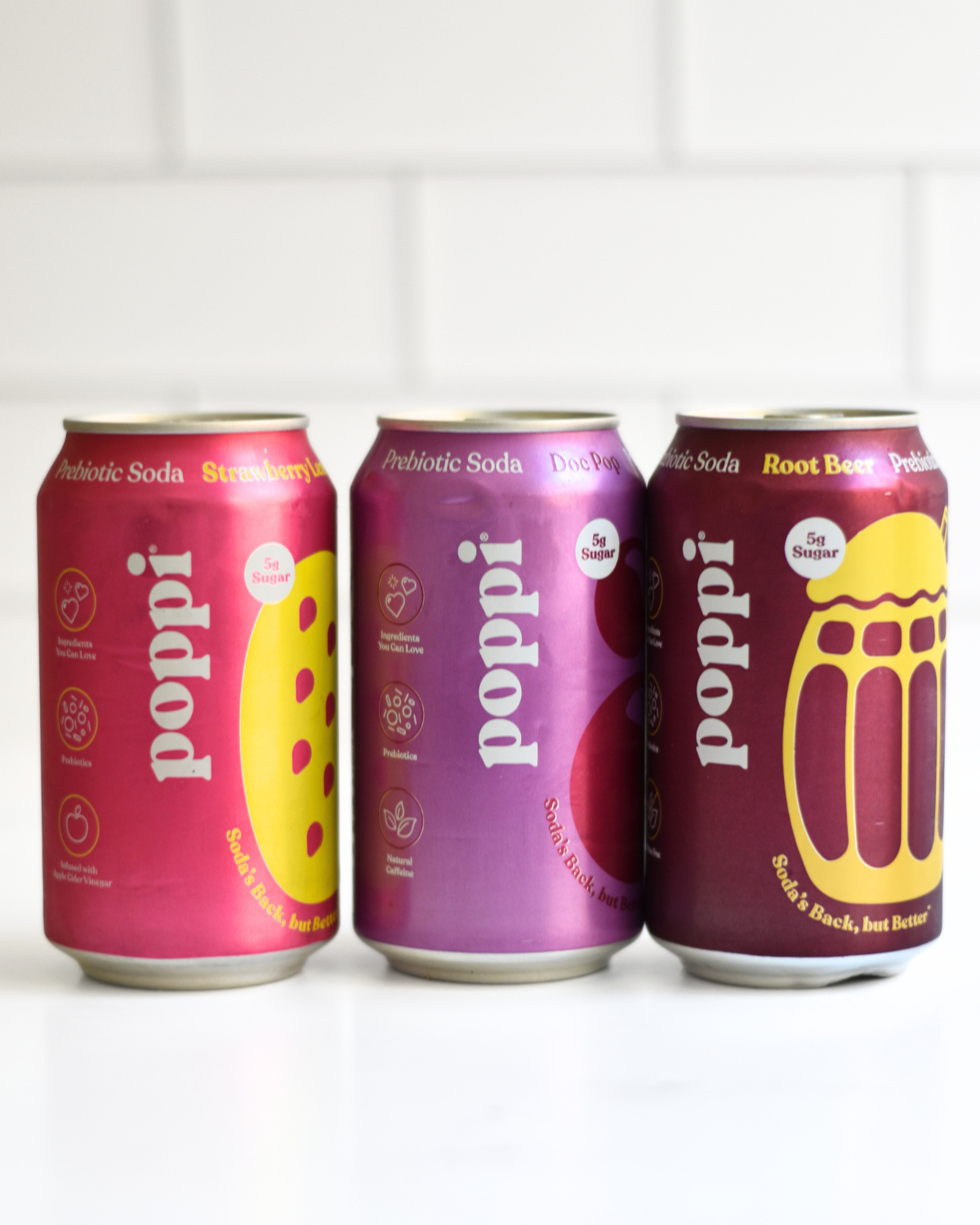
Poppi flavors I tested included:
- Strawberry Lemon
- Root Beer
- Doc Pop
As I tasted each one, I paid attention to the flavor, sweetness, carbonation, aftertaste, and how closely it resembled regular soda.
Olipop taste review
Overall, I found Olipop to be the creamier and more soda-like of the two brands. The flavors felt a bit richer and more indulgent, especially the classic soda-inspired varieties.
The Cream Soda was definitely my favorite. It had a smooth, creamy vanilla flavor that reminded me of traditional cream soda, but with a little less sweetness.
I was also impressed by the Root Beer, which actually tasted a lot like a classic root beer.
The only flavor I wasn’t a fan of was Banana Cream. It tasted fine, but the banana flavor just wasn’t for me. That said, taste is highly personal, and I’ve seen plenty of fans rave about it online.
If I were repurchasing, I’d happily buy the Cream Soda and Root Beer again.
Poppi taste review
Compared with Olipop, Poppi tasted lighter, fruitier, and crisper. In a lot of ways, it reminded me more of sparkling juice or even kombucha than regular soda.
As a reformed Dr. Pepper addict, my favorite flavor was Doc Pop, which did a surprisingly good job recreating the classic Dr. Pepper flavor while still maintaining Poppi’s lighter profile.
The Root Beer was also enjoyable, but it didn’t quite scratch the same nostalgic root beer itch as Olipop’s version.
Strawberry Lemon was refreshing and fruity, but tasted a little too artificial for my liking.
Ultimately, though, all three flavors had a strong aftertaste that I didn’t love, so I probably won’t be stocking up anytime soon.
However, plenty of online reviewers seem to enjoy Poppi without any complaints, so your mileage may vary there.
Which tastes better?
This one definitely comes down to personal preference, but I preferred Olipop overall. As someone who enjoys classic soda flavors like cream soda and root beer, I found Olipop’s flavors a bit closer to what I’d reach for when craving a soda.
I also didn’t notice the same strong aftertaste that I picked up with Poppi.
However, I can absolutely see why some people prefer Poppi. Its fruity, crisp flavor profile feels lighter and more refreshing. If you like sparkling juice, kombucha, or fruit-forward drinks, Poppi may be more your style.
FAQ
More helpful articles
How to Start Fermenting Foods at Home (Beginner-Friendly Guide)
Is Coconut Cult Worth It? A Dietitian’s Honest Review
Probiotic Foods vs. Supplements: Which is Better for Gut Health?
Conclusion
When comparing Olipop vs. Poppi, Olipop comes out on top as the healthier choice thanks to its higher fiber content, slightly lower sugar, and more robust prebiotic formula.
That said, both drinks can be a fun and flavorful way to cut back on your soda intake.
If you’re looking for a gut-friendly option with a little more fiber, I’d choose Olipop, but if you prefer a lighter drink that tastes more like classic soda, Poppi might be a better fit.