
Oat Milk vs. Almond Milk vs. Soy Milk: Which Plant Milk Is Healthiest?
Quick summary
Plant-based milks have come quite a long way from being a niche alternative sitting in the corner of the grocery store. Now you’ve got oat, almond, and soy milk lining the shelves of every supermarket, each claiming to be the best choice for your cup of coffee, your waistline, and your overall health.
However, once you actually start comparing them, it quickly becomes clear that they’re not interchangeable at all, and the best choice really depends on what you’re using them for. In this guide, we’ll break down how oat milk vs. almond milk vs. soy milk really compare so you can figure out which one fits your routine best.
Quick comparison
Here’s a closer look at how oat milk vs. almond milk vs. soy milk stack up:
| Oat Milk | Almond Milk | Soy Milk | |
|---|---|---|---|
| Calories (per cup) | 110 | 49 | 93 |
| Protein (per cup) | 2g | 1g | 9g |
| Fat (per cup) | 6g | 3g | 5g |
| Carbs (per cup) | 13g | 4g | 3g |
| Texture | Creamy, thick, smooth | Light, thin, watery | Medium, creamy but lighter than oat |
| Nutrient Density | Moderate (carb-heavy, some fortification) | Low (low calories, low protein) | High (protein-rich, most balanced overall) |
| Environmental Impact | Low impact (low water use, low land use) | Higher impact (very high water use) | Moderate to low impact (efficient crop, generally sustainable) |
| Best Uses | Coffee, lattes, baking, and creamy recipes | Low-calorie drinks, and smoothies | Protein boosts, meals, and smoothies |
Oat milk
Oat milk has quickly become one of the most popular plant-based milks, especially in coffee shops. Thanks to its naturally creamy texture and mild, slightly sweet flavor, it easily blends into everything from lattes to overnight oats.
In terms of nutrition, oat milk tends to be higher in carbs and calories than other plant milks since it’s made from blended oats and water. Many store-bought versions are also fortified with calcium, vitamin D, and vitamin B12 to better match the nutrient profile of dairy milk.
One cup of fortified oat milk provides the following nutrients:
- Calories: 110
- Protein: 2 grams (g)
- Fat: 6g
- Carbohydrates: 13g
- Fiber: 1g
- Calcium: 378 milligrams (mg) (29% of the Daily Value, or DV)
- Vitamin B12: 1.2 micrograms (µg) (51% of the DV)
- Vitamin D: 4.2µg (21% of the DV)
- Magnesium: 19.5mg (5% of the DV)
Overall, oat milk is a great choice if you want something creamy, versatile, and especially coffee-friendly.
Pros
Cons
Almond milk
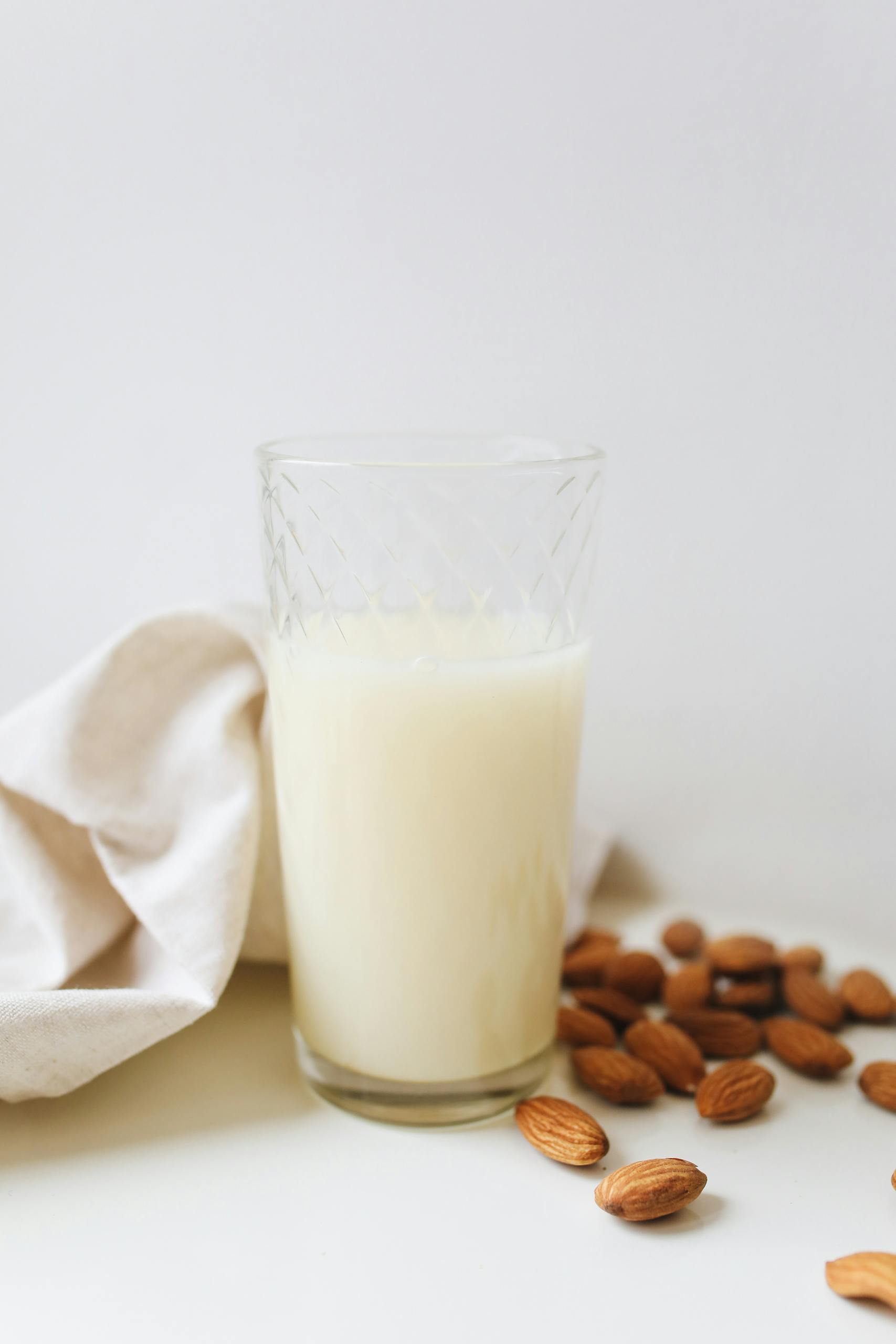
Almond milk is one of the most widely used dairy alternatives, particularly for people looking for a lower-calorie option. It has a light, watery texture and a mild, slightly nutty flavor that works well in smoothies, cereals, and baking.
Because it’s made by blending almonds with water and straining the mixture, almond milk is naturally low in calories and protein. Most store-bought versions are fortified with nutrients like calcium, vitamin D, and vitamin E to better resemble the nutritional profile of dairy milk.
One cup of fortified almond milk provides the following nutrients:
- Calories: 49
- Protein: 1g
- Fat: 3g
- Carbohydrates: 4g
- Fiber: 0g
- Calcium: 417mg (32% of the DV)
- Vitamin E: 8mg (53% of the DV)
- Vitamin B12: 0.8µg (35% of the DV)
- Vitamin D: 2.2µg (11% of the DV)
- Phosphorus: 73mg (6% of the DV)
Because almond milk tends to be lighter and less creamy than oat milk, it’s not ideal for frothy coffee drinks but great for recipes where texture isn’t the main focus.
Pros
Cons
Soy milk
Soy milk stands out for its naturally high protein content. Made from soybeans and water, it has a creamy but slightly more neutral (sometimes lightly “beany”) flavor compared to oat or almond milk.
Nutritionally, soy milk is the closest plant-based alternative to dairy milk. It typically provides a solid amount of protein and a good balance of fat and carbs, making it one of the most suitable dairy replacements in meals and smoothies.
Like other plant milks, most store-bought soy milks are fortified with calcium, vitamin D, and vitamin B12 to better match dairy’s micronutrient profile.
One cup of fortified soy milk provides the following nutrients:
- Calories: 93
- Protein: 9g
- Fat: 5g
- Carbohydrates: 3g
- Fiber: 0g
- Vitamin B12: 1µg (40% of the DV)
- Copper: 0.3mg (29% of the DV)
- Vitamin A: 142µg (16% of the DV)
- Riboflavin: 0.2mg (16% of the DV)
- Phosphorus: 168mg (13% of the DV)
- Magnesium: 54mg (13% of the DV)
- Thiamin: 0.2mg (13% of the DV)
- Folate: 49µg (12% of the DV)
- Vitamin D: 1.7µg (9% of the DV)
- Potassium: 386mg (8% of the DV)
If protein is your priority, soy milk may be your best bet, as it’s the closest to cow’s milk in terms of protein content and is often fortified with other nutrients found in dairy, like calcium and vitamin D.
Pros
Cons
Stay in the loop!
HEALTHY EATING TIPS & RECIPES delivered directly TO YOUR INBOX
How they compare
Read on for a quick, head-to-head breakdown of how oat milk vs. almond milk vs. soy milk compare so you can see which fits your needs best.
Oat milk vs. almond milk
Compared to almond milk, oat milk tends to be a bit more filling because it contains more carbs and a bit more natural structure from the oats themselves. It also performs better in hot drinks and recipes where you want a richer, more cohesive result.
Almond milk is on the opposite end of the spectrum, as it’s very low in calories and relatively light nutritionally. This can be an advantage if you’re trying to cut back on calories, but it also means it’s less likely to keep you full. It works more as a neutral base, whereas oat milk plays a more noticeable role in both flavor and texture.
Bottom line: Oat milk is the better choice for fullness and versatility, while almond milk works well when you’re aiming for a lighter, lower-calorie alternative.
Soy milk vs. almond milk
Soy milk is much more nutrient-dense than almond milk, particularly because of its high protein content. This makes it more filling and better suited as a true dairy replacement in your favorite recipes. It also provides a broader range of naturally occurring micronutrients, which gives it an added nutritional edge.
Almond milk, by contrast, is a lot lower in both calories and protein, making it a lighter option that has less of an impact on the nutritional profile of your meal. While this can be a bonus for calorie-conscious eating, it means it doesn’t contribute much to satiety or protein intake.
Bottom line: Soy milk wins if you want a more filling, protein-rich milk alternative that can stand in for dairy, but almond milk is better suited for those prioritizing a very low-calorie, light option that blends into the background of recipes.
Oat milk vs. soy milk
Soy milk provides over four times as much protein as oat milk, making it a much more filling option. It also offers a wider range of micronutrients, including vitamin B12, vitamin A, and copper, among others.
On the flip side, many people prefer oat milk for its creamy texture and ability to blend smoothly into drinks. While it doesn’t offer much in the protein department, it performs well in recipes where consistency and taste matter more than nutritional density.
Bottom line: Soy milk is best if you’re prioritizing protein, satiety, and a more nutritionally complete milk alternative, while oat milk shines for its creamy texture, mild flavor, and versatility.
Health considerations
When comparing oat, almond, and soy milk from a health perspective, the main differences come down to protein content, calorie density, added ingredients, and individual dietary needs. No single option is the best across the board, and each brings its own unique set of benefits to the table.
Soy milk stands out as the most nutritionally complete option overall, especially because of its high protein content and broader micronutrient profile. This makes it the closest match to dairy milk in terms of nutrition and satiety.
Oat milk sits in the middle, offering a more carbohydrate-forward profile. It’s often fortified and works well in a variety of recipes, but it may be less suitable for people closely counting carbs or those who need higher protein. Additionally, keep in mind that some oat milks include added oils or sweeteners to enhance taste and texture, so the quality can vary significantly between brands.
Almond milk is the lightest option nutritionally, which can be beneficial for calorie-conscious eating. However, it is also the lowest in protein and naturally occurring nutrients, meaning its health value often depends heavily on fortification.


Sustainability considerations
From an environmental perspective, oat, almond, and soy milk differ significantly in their water use, land use, and agricultural impact.
Almond milk tends to have the biggest environmental impact, mainly because almonds require a lot of water to grow. This is especially important in places where water is already limited, like parts of California where many almonds are produced.
Oat milk is usually one of the more eco-friendly choices. Oats don’t need much water, grow in a wide range of climates, and generally have a lower environmental footprint compared to nuts or dairy.
Soy milk also performs pretty well environmentally. Soybeans are very efficient to grow and produce a lot of protein per acre of land, which makes them a resource-efficient crop overall. While there are broader concerns about land use in some regions, soy used for food and beverages is considered a relatively sustainable option for the most part.
Final verdict
At the end of the day, there’s no clear winner between oat milk vs. almond milk vs. soy milk. Instead, the best choice depends on your personal needs and preferences.
Soy milk is the most nutritionally balanced option with the highest protein and the closest match to dairy milk, making it a strong all-purpose choice. Meanwhile, oat milk stands out for its creamy texture and versatility, especially in coffee and recipes. And almond milk is best if you want the lowest-calorie option and a light, neutral base.
The right choice really depends on what you value most, whether that’s nutrition, taste, or versatility.
Which plant milk should you choose?
There’s no single “best” plant milk. Instead, it really depends on what you care about most, whether that’s protein, calories, taste, or how you use it day to day. Here’s a simple breakdown to help you pick the right one for your needs.
Choose soy milk if:
- you want the highest protein content
- you’re looking for the option closest to dairy
- you need a more filling milk for smoothies or meals
- you want something that adds more nutritional value to your drinks and meals
Choose almond milk if:
- you want the lowest-calorie option
- you prefer a light, subtle flavor
- you mostly use milk as a small add-in for coffee, smoothies, and other recipes
- you don’t rely on milk for protein or satiety
Choose oat milk if:
- you love creamy, café-style coffee drinks
- you want something that blends smoothly and tastes mild
- you prefer a more filling option than almond milk (but less protein than soy)
- you use milk mostly in lattes, cereal, or baking
FAQ
More helpful articles
Conclusion
Oat milk, almond milk, and soy milk can all be healthy choices and the right choice for you depends on your priorities. If you want more protein, soy milk may be your best bet, whereas oat milk is great for creaminess and almond milk works well for low-calorie diets. Rather than focusing on which milk is best, it’s more helpful to choose the one that fits your lifestyle, goals, and preferences.